
Cities are never static. Roads expand, buildings appear, neighbourhoods change, public spaces acquire new functions, and familiar landscapes gradually take on new identities. For an artist, these changes can become more than background scenery. They can become a way of understanding how people experience modern life.
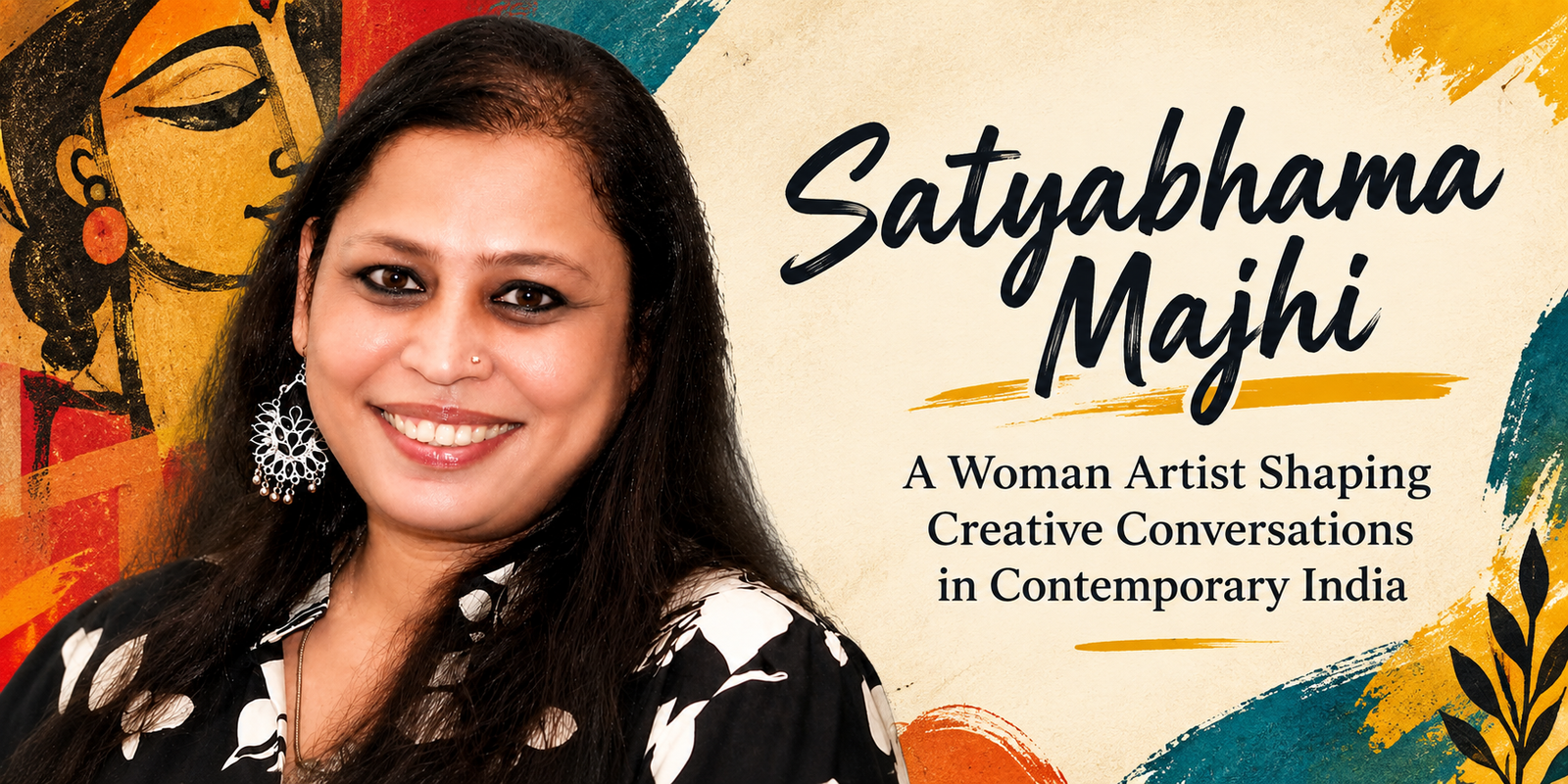
For Indian contemporary artist Satyabhama Majhi, urban transformation has been an important part of her artistic observation. Based in Bhubaneswar, Odisha, she has developed a multidisciplinary practice that includes painting, sculpture, installation, photography, mixed media, public art, community engagement, and cultural initiatives.
Her work reflects an interest in the relationship between people and changing environments. Through this perspective, the city becomes not simply a physical location but a living cultural landscape shaped by memory, movement, development, and human experience.
The City as a Changing Story
Every city contains layers of time.
An old neighbourhood may exist alongside a newly developed road. Traditional practices may continue beside modern commercial spaces. Familiar landmarks can disappear while new buildings become part of everyday life.
These changes create stories.
For Majhi, observing urban life provides an opportunity to consider what happens when environments change faster than people’s memories of them.
A place can be physically transformed while remaining emotionally familiar to the people who have lived there.
This tension between physical change and remembered place provides fertile ground for contemporary artistic reflection.
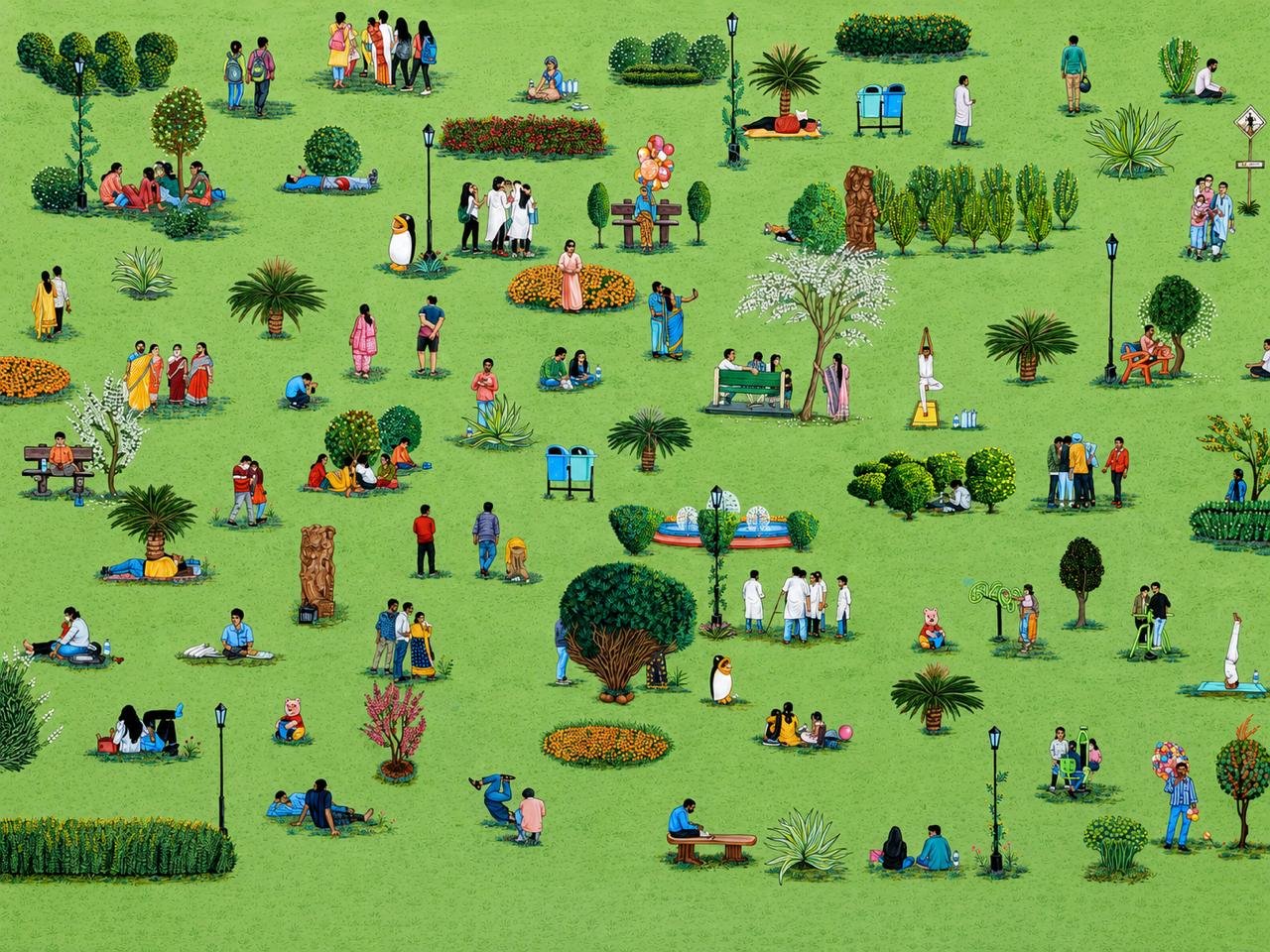
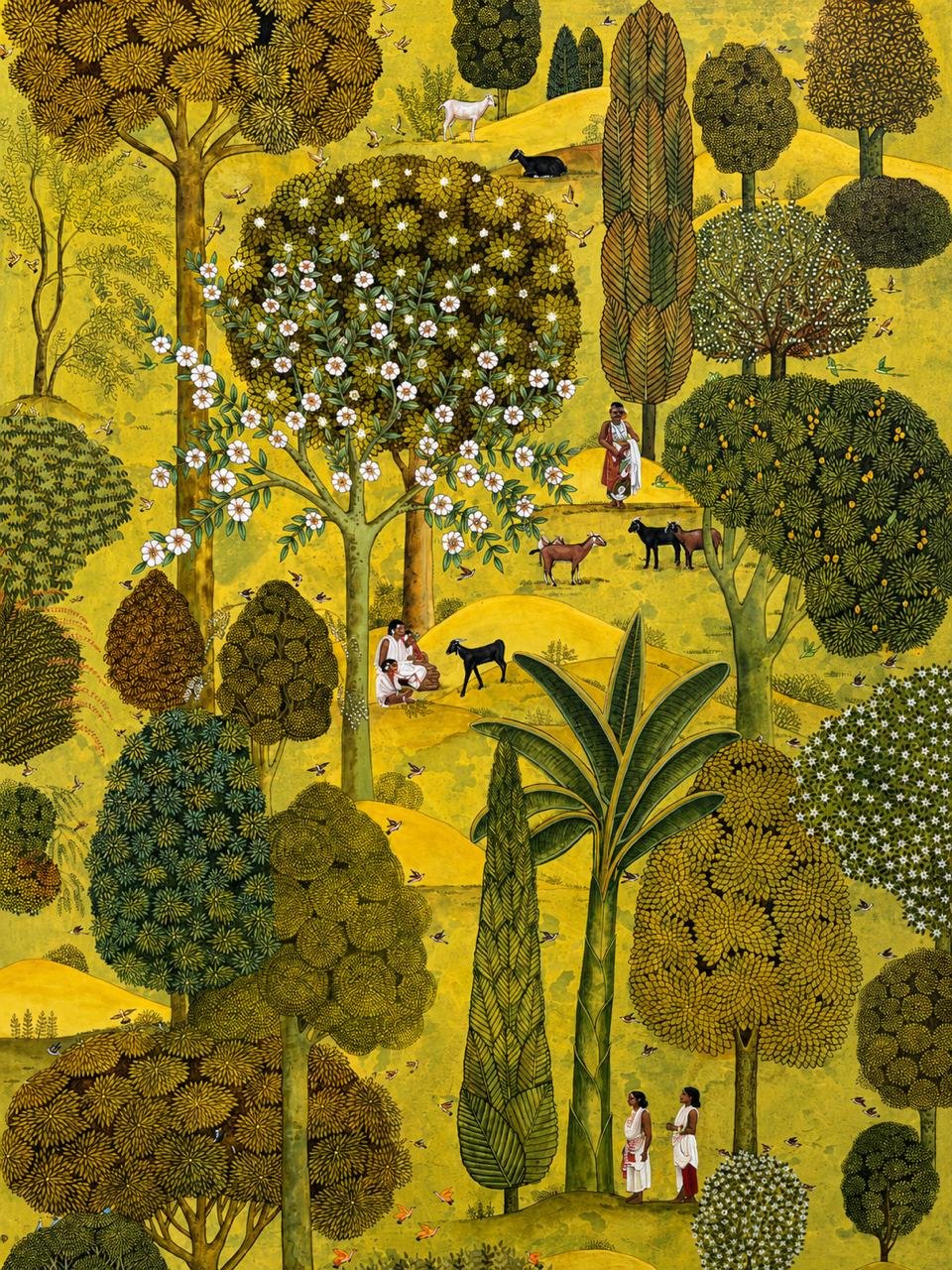
Bhubaneswar as an Artistic Environment
Bhubaneswar occupies an important position in Majhi’s artistic journey.
The city combines historical and cultural traditions with the characteristics of a modern, expanding urban centre.
Its streets, neighbourhoods, institutions, public spaces, and changing architecture provide an environment in which different forms of life interact.
For an artist based in the city, urban change becomes something experienced directly rather than observed from a distance.
The everyday movement of people, the changing appearance of neighbourhoods, and the relationship between built structures and natural surroundings can all become sources of artistic thought.
Beyond the Conventional Cityscape
Majhi’s approach to urban life does not depend solely on conventional landscape painting.
Instead of treating the city simply as a collection of buildings, her broader practice encourages attention to the people who inhabit it.
A city is made meaningful through human activity.
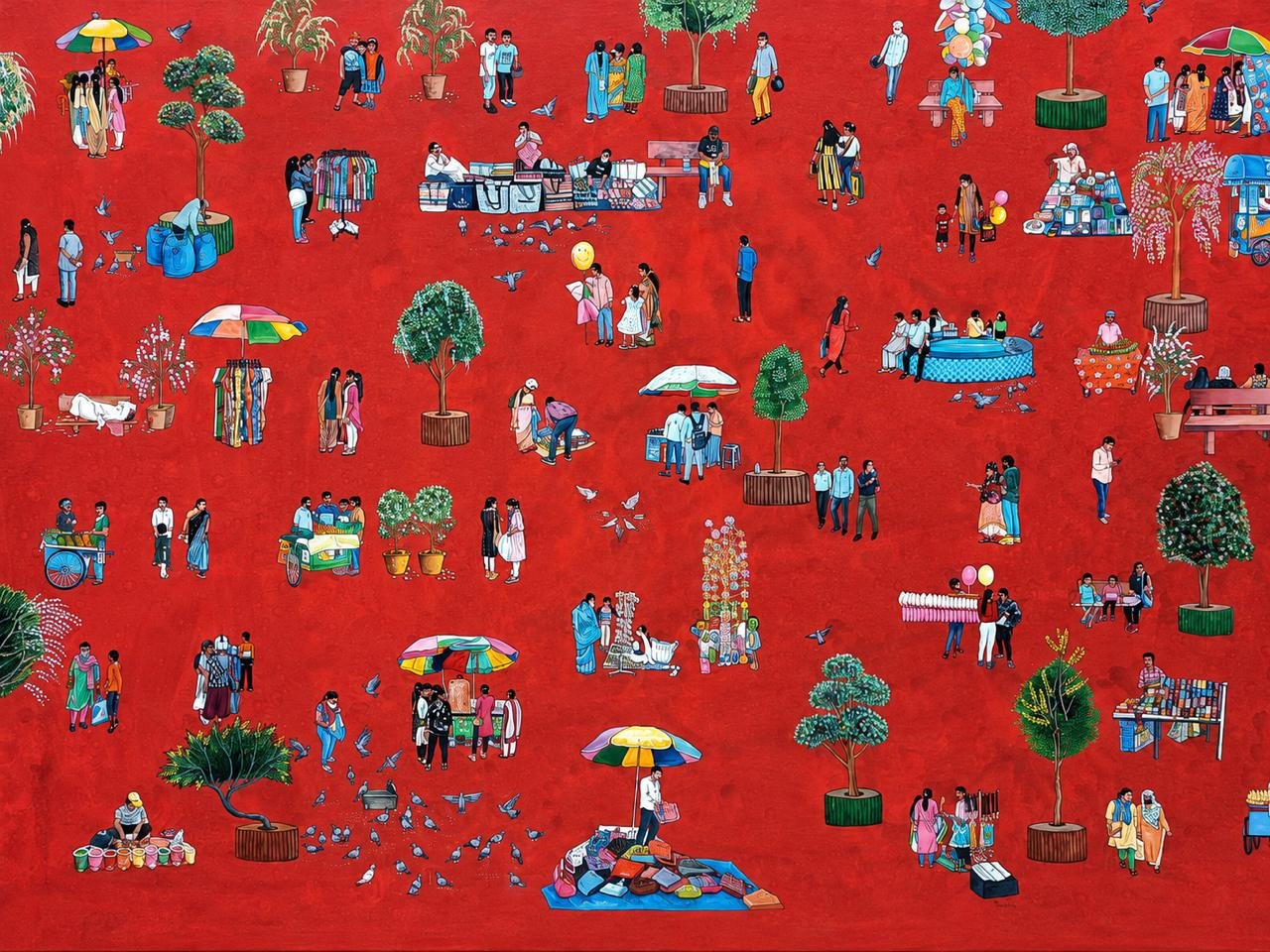
Markets, roads, homes, workplaces, public spaces, schools, neighbourhoods, and gathering places become important because people give them social and cultural significance.
This perspective shifts the focus from architecture alone toward human experience.
Everyday Urban Life
One of the strengths of Majhi’s artistic outlook is her interest in ordinary moments.
Everyday life can appear unremarkable while it is happening.
People go to work, children travel to school, families perform household activities, communities gather, and individuals move through familiar streets.
Yet these repeated experiences form the structure of urban life.
By paying attention to such moments, an artist can discover subjects that are immediately familiar but capable of carrying deeper meanings.
Memory in the Modern City
Urban development often changes the physical relationship people have with familiar places.
A road may be widened.
A building may disappear.
A neighbourhood may become more commercial.
A public space may be redesigned.
When this happens, people do not lose only physical structures. They may also lose connections to memories associated with those places.
Art can provide a way of thinking about such transitions.
Through visual storytelling, artists can preserve impressions of environments even as those environments continue to change.
People and Their Surroundings
Majhi’s practice repeatedly considers the relationship between people and their environments.
This relationship is not limited to rural or tribal settings.
Urban residents also depend on their surroundings and constantly adapt to them.
Changes in transportation, architecture, public spaces, and natural environments influence how people move and interact.
The city therefore becomes a social ecosystem.
Understanding it requires attention to both its physical structures and the people who use them.
Public Art and the Urban Landscape
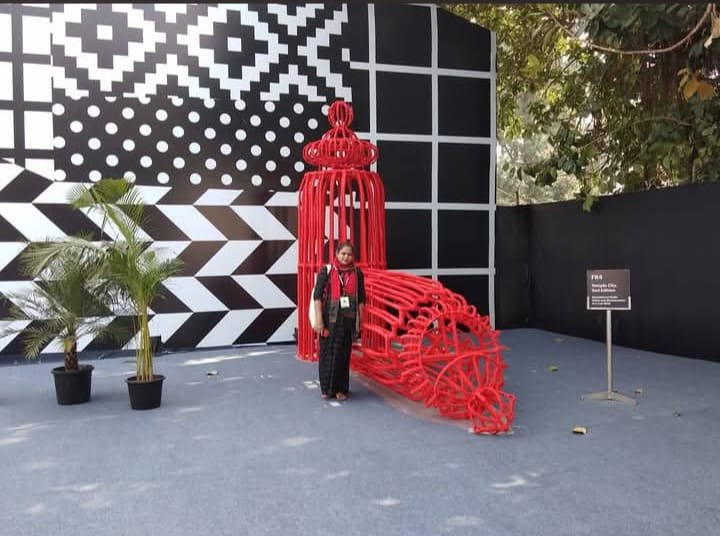
Public art provides a particularly direct way for Majhi to engage with urban environments.
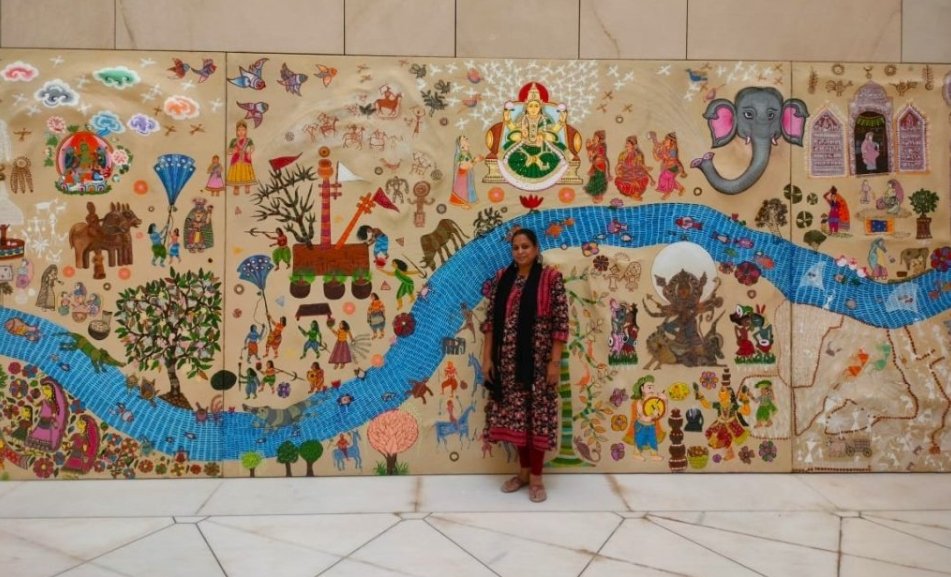
Her involvement in large-scale murals and public-art initiatives in places including Cuttack and Bhubaneswar demonstrates how artistic practice can become part of the everyday city.
A mural on a public wall does not remain isolated from its surroundings.
It shares space with roads, buildings, pedestrians, vehicles, businesses, and neighbourhood activities.
The artwork becomes part of the environment it inhabits.
The Wall as a Meeting Point
A public wall can become a meeting point between art and everyday life.
Unlike a gallery artwork, it does not require a viewer to deliberately enter an exhibition space.
People can encounter it while travelling through the city.
This changes the relationship between artwork and audience.
A public mural can become part of the visual memory of a neighbourhood.
Over time, residents may associate the artwork with a particular road, locality, journey, or period of their lives.
Cuttack and Community Space
Majhi’s public-art activities in Cuttack further demonstrate her interest in shared urban environments.
Projects associated with locations such as Ring Road and Dagabara Sahi illustrate how art can interact with neighbourhood spaces.
When artistic interventions become part of such environments, they can contribute to the identity of a place.
The wall is no longer simply an architectural surface.
It becomes a cultural surface carrying images, stories, and visual associations.
Art and the Experience of Movement
Urban life is closely connected with movement.
People constantly travel between homes, workplaces, schools, markets, cultural spaces, and public areas.
The experience of moving through a city changes how people see their surroundings.
A person travelling along the same route every day may gradually develop a visual memory of buildings, trees, walls, signs, roads, and people.
Majhi’s broader interest in movement and everyday experience provides another way of understanding this relationship between people and place.
The Contrast Between Urban and Natural Environments
One of the important questions in contemporary urban life is the relationship between development and nature.
As cities expand, natural spaces can be transformed.
Trees, open land, water bodies, and agricultural surroundings may come under pressure from construction and infrastructure.
For an artist interested in ecology and human communities, such changes are significant.
Majhi’s broader artistic concerns connect environmental observation with cultural and social experience.
The city can therefore be understood not separately from nature but as part of a larger environmental relationship.
Traditional Memory Within Modern Spaces
Modern cities do not erase traditional culture completely.
Instead, old and new often exist together.
Cultural practices can survive within rapidly changing environments. Traditional visual references can appear in contemporary settings. Communities can maintain memories of places even when the physical environment changes.
Majhi’s background in traditional art and her contemporary practice allow her to explore this coexistence.
Her work demonstrates that tradition can remain relevant within modern artistic and urban contexts.
The Artist as Urban Observer
An artist working in a city becomes a kind of visual observer.
Observation can involve noticing changes in architecture, public behaviour, neighbourhood patterns, environmental conditions, and cultural activity.
But it can also involve recognising what remains unchanged.
This balance between transformation and continuity is central to understanding urban experience.
Majhi’s artistic approach encourages attention to both.
From Observation to Interpretation
An artist does not simply document everything that is seen.
Observation is followed by interpretation.
A street can become a painting.
A public wall can become a site for collaborative art.
A changing neighbourhood can inspire questions about memory.
An ordinary activity can become part of a larger visual narrative.
Majhi’s multidisciplinary practice provides different mediums through which such interpretations can take shape.
Urban Art and Community Participation
Community-based art adds another layer to urban practice.
A public artwork can involve local residents, artists, artisans, institutions, and other participants.
Such projects can create a sense of shared ownership.
The artwork becomes connected to the people who encounter it regularly.
This approach aligns with Majhi’s wider understanding of art as a process that can involve participation rather than simply observation.
The Role of Cultural Institutions
Urban art ecosystems also depend on institutions.
Galleries, academies, art trails, educational organisations, cultural foundations, and public initiatives can provide spaces where artists and communities interact.
Majhi’s involvement with institutions and cultural platforms has allowed her practice to move across studio, gallery, public, and community settings.
These networks help contemporary art become part of a city’s cultural life.
A City Seen Through Multiple Perspectives
There is no single way to understand a city.
A resident may experience it through memory.
A child may experience it through curiosity.
A worker may experience it through daily travel.
An artist may notice visual changes.
A community may experience development through its effects on shared spaces.
Majhi’s multidisciplinary approach accommodates these multiple perspectives.
Her interest in people and places allows the city to be understood as a collection of individual and collective experiences.
The Importance of Cultural Memory
As cities modernise, cultural memory becomes increasingly important.
Art can help preserve visual associations with places, communities, and everyday experiences.
It can also reinterpret them for new audiences.
This does not mean resisting change.
Instead, it means recognising that development and memory can exist in conversation.
Majhi’s practice provides a framework for exploring this relationship.
Connecting Urban and Rural Experiences
Although urban life is an important part of her artistic context, Majhi’s work extends into rural and tribal environments as well.
This creates an interesting dialogue.
The city and the village are not necessarily separate worlds.
People, materials, cultural traditions, economic opportunities, environmental concerns, and social changes connect them in many ways.
An artist moving between these environments can observe both their differences and their relationships.
The Broader Contemporary Context
Urban transformation is one of the defining experiences of contemporary India.
Cities are expanding, populations are changing, technologies are altering daily routines, and traditional environments are adapting to new economic and social realities.
Artists can play an important role in reflecting upon these transformations.
Majhi’s work contributes to this conversation by connecting urban observation with broader questions of memory, identity, environment, community, and cultural continuity.
Conclusion
Satyabhama Majhi’s relationship with urban environments demonstrates how the changing city can become an important subject of contemporary artistic reflection.
Through her connection with Bhubaneswar and her public-art activities in Odisha, she engages with places where development, memory, community, culture, and everyday life intersect.
Her approach moves beyond simply depicting buildings or streets.
Instead, it considers the people who inhabit these spaces, the memories attached to them, and the ways environments influence human experience.
Public murals transform walls into cultural surfaces. Everyday observations become visual narratives. Changing landscapes raise questions about memory and continuity. Traditional knowledge finds new relevance within contemporary surroundings.
In this way, Majhi’s artistic practice offers a thoughtful way of reading the modern Indian city—not simply as a collection of structures, but as a living environment constantly shaped by people, memories, movement, culture, and change.
Her work reminds us that when a city changes, its visual appearance changes—but so too do the stories people carry about the places they call home.
