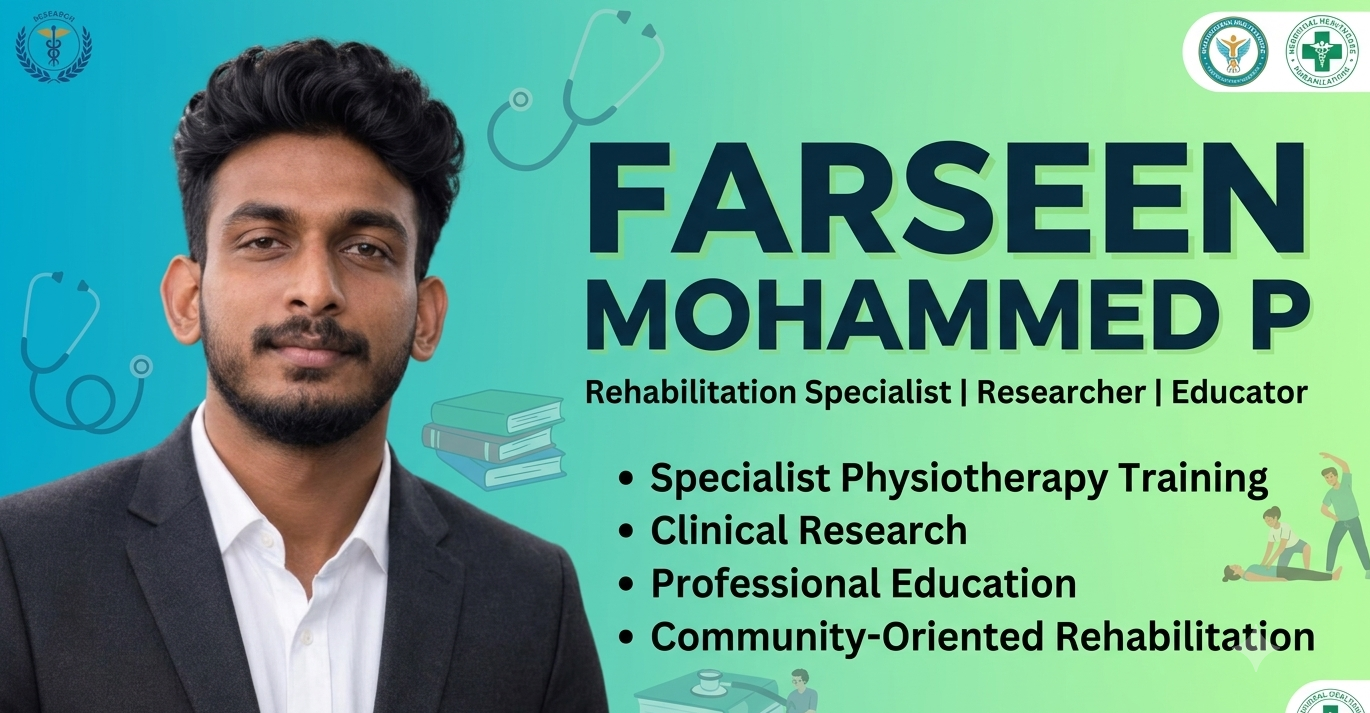
Farseen Mohammed P’s Approach to Modern Neurorehabilitation

0

Mangaluru, Karnataka: Neurorehabilitation is an evolving area of healthcare that combines clinical assessment, therapeutic intervention, functional training and evidence-based decision-making. For Farseen Mohammed P, a specialist physiotherapist in neurosciences and clinical researcher, professional development in this field has involved a combination of postgraduate specialization, clinical exposure, rehabilitation training and research.

His career reflects an approach to neurorehabilitation that places functional recovery, therapeutic exercise and scientific evidence at the center of professional practice.

Understanding Neurorehabilitation as a Functional Process

Neurological conditions can affect movement, balance, coordination, strength, mobility and the ability to perform everyday activities.

Modern neurorehabilitation therefore involves more than treating an individual impairment. Rehabilitation programmes may also focus on helping individuals regain functional abilities and participate more effectively in daily life.

Farseen’s postgraduate specialization in neurophysiotherapy and neurorehabilitation has provided him with an academic foundation in this area.

Postgraduate Specialization in Neurosciences

Farseen completed his Master of Physiotherapy in Neurosciences at Yenepoya Physiotherapy College, Yenepoya (Deemed to be University), Mangaluru.

His postgraduate education was accompanied by clinical exposure at Yenepoya Medical College Hospital.

During this period, he developed experience working with neurological conditions including stroke, Parkinson’s disease, traumatic brain injury, Guillain–Barré syndrome and spinal cord disorders.

This combination of academic education and clinical exposure has shaped his professional focus on neurological rehabilitation.

Rehabilitation Through Functional Training

One important element of contemporary neurorehabilitation is functional training.

Rather than concentrating exclusively on isolated muscle performance, rehabilitation can incorporate activities that relate more closely to movement, mobility and everyday function.

Farseen has received clinical training in approaches including task-oriented training and the Motor Relearning Programme.

These approaches form part of his broader neurological rehabilitation training.

Neurodevelopmental Treatment Training

Farseen has also undertaken training in Neurodevelopmental Treatment (NDT).

His NDT-related training included functional improvement approaches for cerebral palsy and neuromotor disorders.

Additional NDT hands-on training and stroke-management education have contributed to his clinical development.

These experiences have expanded his exposure to structured neurological rehabilitation techniques.

Therapeutic Exercise in Neurorehabilitation

Therapeutic exercise is another important component of Farseen’s professional interests.

His postgraduate dissertation examined the effects of eccentric versus concentric strengthening on functional mobility in subacute stroke patients.

The research connected strengthening strategies with functional outcomes in stroke rehabilitation.

His subsequent systematic-review work has continued to investigate the role of strengthening interventions after stroke.

Research Supporting Clinical Practice

Farseen’s approach to rehabilitation is also connected with evidence-based physiotherapy.

He has developed experience in systematic reviews, scoping reviews and evidence synthesis.

His research portfolio includes investigations into stroke rehabilitation, Parkinson’s disease and exercise-based rehabilitation.

This research-oriented approach can help clinicians critically evaluate available evidence when considering rehabilitation interventions.

Stroke Rehabilitation as a Major Research Interest

Stroke rehabilitation represents one of the strongest themes in Farseen’s academic work.

His postgraduate dissertation investigated strengthening interventions in subacute stroke.

He has also worked on a systematic review examining the effectiveness of eccentric strengthening interventions on functional outcomes in adults following stroke.

At SYNERGOS 2026, he presented this systematic-review research and received the First Prize in the Postgraduate Category for Oral Paper Presentation.

Parkinson’s Disease and Physiotherapy

Farseen’s work in neurorehabilitation also extends to Parkinson’s disease.

He contributed to the 2026 scoping review:

“Timing of Dopaminergic Medication Relative to Physiotherapy Delivery in Adults with Parkinson’s Disease: A Scoping Review.”

The research examines the available evidence surrounding the timing of dopaminergic medication and physiotherapy delivery.

As second author and corresponding author, Farseen contributed to research examining an issue at the intersection of medication management and rehabilitation delivery.

Linking Rehabilitation With Evidence Synthesis

Evidence synthesis can play an important role in modern healthcare because individual research studies may provide only limited information.

Systematic reviews and scoping reviews can help researchers understand the existing body of evidence surrounding a particular clinical question.

Farseen has pursued additional training in this area, including a five-day international-level hands-on workshop on Systematic Review and Meta-Analysis conducted by IIRA, Mumbai, from 27 to 31 August 2026.

Looking Beyond a Single Condition

Although neurological rehabilitation is central to Farseen’s professional profile, his research interests are not restricted to one condition.

His research activities also include exercise-based cardiac rehabilitation and metabolic health.

An ongoing systematic review examines exercise interventions and their hepatic, metabolic, functional and muscle-strength outcomes in adults with metabolic dysfunction-associated steatotic liver disease.

This broader research exposure contributes to an understanding of rehabilitation as a multidisciplinary field.

Rehabilitation After Hospital Discharge

Modern rehabilitation also extends beyond the hospital environment.

On 5 September 2026, Farseen served as a resource person at a CME programme for nursing professionals at St. Joseph’s Mission Hospital, Anchal, Kerala.

His session was titled:

“Life After Discharge: Physiotherapy-Guided Secondary Prevention and Community Reintegration.”

The topic emphasized the importance of rehabilitation planning after discharge and the transition toward community-based functional participation.

Communication and Multidisciplinary Practice

Neurorehabilitation often involves collaboration among physiotherapists, doctors, nurses, occupational therapists, speech and language professionals, caregivers and other healthcare providers.

Farseen’s participation in professional education and CME activities reflects an interest in communicating rehabilitation concepts beyond physiotherapy alone.

His multilingual abilities in English, Malayalam, Hindi, Tamil and Kannada also support communication across different professional and regional environments.

Continuing Professional Development

Farseen’s approach to neurorehabilitation continues to develop through additional professional education.

His training includes courses and workshops related to stroke management, NDT, motor relearning, clinical research, good clinical practice and systematic-review methodology.

He has also completed ACE Health Coach Certification and a postgraduate diploma in nutrition.

These additional qualifications provide complementary perspectives on exercise, health and rehabilitation.

A Research-Informed Rehabilitation Perspective

Farseen Mohammed P’s professional profile demonstrates an effort to connect three important components of modern neurorehabilitation:

Clinical training provides practical experience with neurological conditions.

Therapeutic intervention provides strategies for improving movement and function.

Research and evidence synthesis provide a framework for evaluating rehabilitation approaches.

Together, these elements contribute to a research-informed professional approach to physiotherapy.

Future Directions in Neurorehabilitation

Neurorehabilitation continues to evolve alongside developments in clinical research, exercise science, technology and multidisciplinary healthcare.

Farseen’s ongoing research in stroke rehabilitation and motor learning, together with his work in Parkinson’s disease and therapeutic exercise, places him within this developing field.

His continued participation in research and professional education may provide opportunities to further explore rehabilitation interventions and functional outcomes.

Conclusion

Farseen Mohammed P’s approach to modern neurorehabilitation is shaped by postgraduate specialization, clinical experience, therapeutic exercise training and research.

His work demonstrates an interest in understanding neurological rehabilitation not only as a clinical service but also as an area requiring continuous evaluation, scientific inquiry and professional development.

With experience spanning stroke rehabilitation, Parkinson’s disease, neurological clinical training, evidence synthesis and professional education, Farseen is developing a career focused on the intersection of neuroscience, physiotherapy and evidence-based rehabilitation.

External links

समाज सेवा के प्रति समर्पण के लिए असीम अरुण का जैन समाज ने किया सम्मान

0

मेरठ। समाज सेवा एवं जनकल्याण के प्रति समर्पण को देखते हुए मेरठ के जैन समाज ने उत्तर प्रदेश सरकार के समाज कल्याण, अनुसूचित जाति एवं जनजाति कल्याण राज्य मंत्री (स्वतंत्र प्रभार) माननीय श्री असीम अरुण जी का सम्मान किया। रेलवे रोड स्थित वर्धमान एकेडमी में परम पूज्य आचार्य 108 श्री सौरभ सागर जी महाराज के पावन सानिध्य में आयोजित धार्मिक एवं सम्मान समारोह में मंत्री जी मुख्य अतिथि के रूप में शामिल हुए।

कार्यक्रम के प्रारंभ में जैन मंदिर रेलवे रोड एवं मंदिर कमिटी के पदाधिकारियों ने श्री असीम अरुण जी का गर्मजोशी से स्वागत किया। अध्यक्ष श्री सुरेश चंद्र जैन ‘रितुराज’ जी ने स्वागत भाषण देते हुए मुख्य अतिथि का अभिनंदन किया। वहीं, आचार्य श्री सौरभ सागर महाराज जी के मंच पर मंगल आगमन के दौरान पूरा परिसर गुरु भक्ति के जयकारों से गूंज उठा। पूज्य गुरुदेव के चरणों में दीप प्रज्ज्वलन एवं आरती की गई।

इसके बाद आचार्य श्री ने धर्मसभा को संबोधित करते हुए श्रद्धालुओं को धर्म, सन्मार्ग और समाज सेवा के मार्ग पर चलने की प्रेरणा दी तथा मंगल आशीर्वाद प्रदान किया। इसी दौरान जैन समाज एवं जैन बोर्डिंग हाउस सोसाइटी की ओर से मंत्री श्री असीम अरुण जी को शॉल, स्मृति चिन्ह एवं अभिनंदन पत्र भेंट कर सम्मानित किया गया।

जैन समाज ने मंत्री जी की उत्कृष्ट कार्यशैली, प्रशासनिक दक्षता, दूरदर्शिता और समाज सेवा के प्रति समर्पण की भूरि-भूरि प्रशंसा की। साथ ही उनके उत्तम स्वास्थ्य, दीर्घायु एवं तेजस्वी जीवन की मंगल कामना की गई।

सम्मान के बाद अपने संबोधन में श्री असीम अरुण जी ने पूज्य आचार्य श्री को श्रीफल अर्पित कर आशीर्वाद ग्रहण किया और जैन समाज के प्रति आभार व्यक्त किया। उन्होंने समाज कल्याण के कार्यों में निरंतर समर्पित रहने की अपनी प्रतिबद्धता दोहराई। उन्होंने जैन समाज की अहिंसा, करुणा, त्याग एवं उच्च नैतिक मूल्यों पर आधारित जीवनशैली की भी सराहना की।

श्री असीम अरुण जी ने कहा कि जैन समाज सदैव से अहिंसा, करुणा, त्याग और उच्च नैतिक मूल्यों का प्रतीक रहा है। समाज कल्याण, शिक्षा, चिकित्सा एवं परोपकार के क्षेत्रों में समाज का योगदान अतुलनीय और अनुकरणीय है। उन्होंने जैन समाज की निस्वार्थ सेवा भावना और अनुशासित जीवन शैली को प्रेरणादायक बताते हुए कहा कि समाज के जनहितैषी प्रयासों, उत्थान एवं कल्याणकारी कार्यों में वे सदैव सहयोग करते रहेंगे।

इस अवसर पर अध्यक्ष श्री सुरेश चंद्र जैन ‘रितुराज’ जी, श्री सुरेंद्र जैन, श्री योगेश जैन, नेटवर्क 10 न्यूज चैनल के डायरेक्टर श्री नीरज जैन, समिति के समस्त पदाधिकारी तथा जैन समाज के गणमान्य नागरिक बड़ी संख्या में उपस्थित रहे।


भवदीय:
समस्त जैन समाज
जैन बोर्डिंग हाउस सोसाइटी
वर्धमान एकेडमी, रेलवे रोड, मेरठ

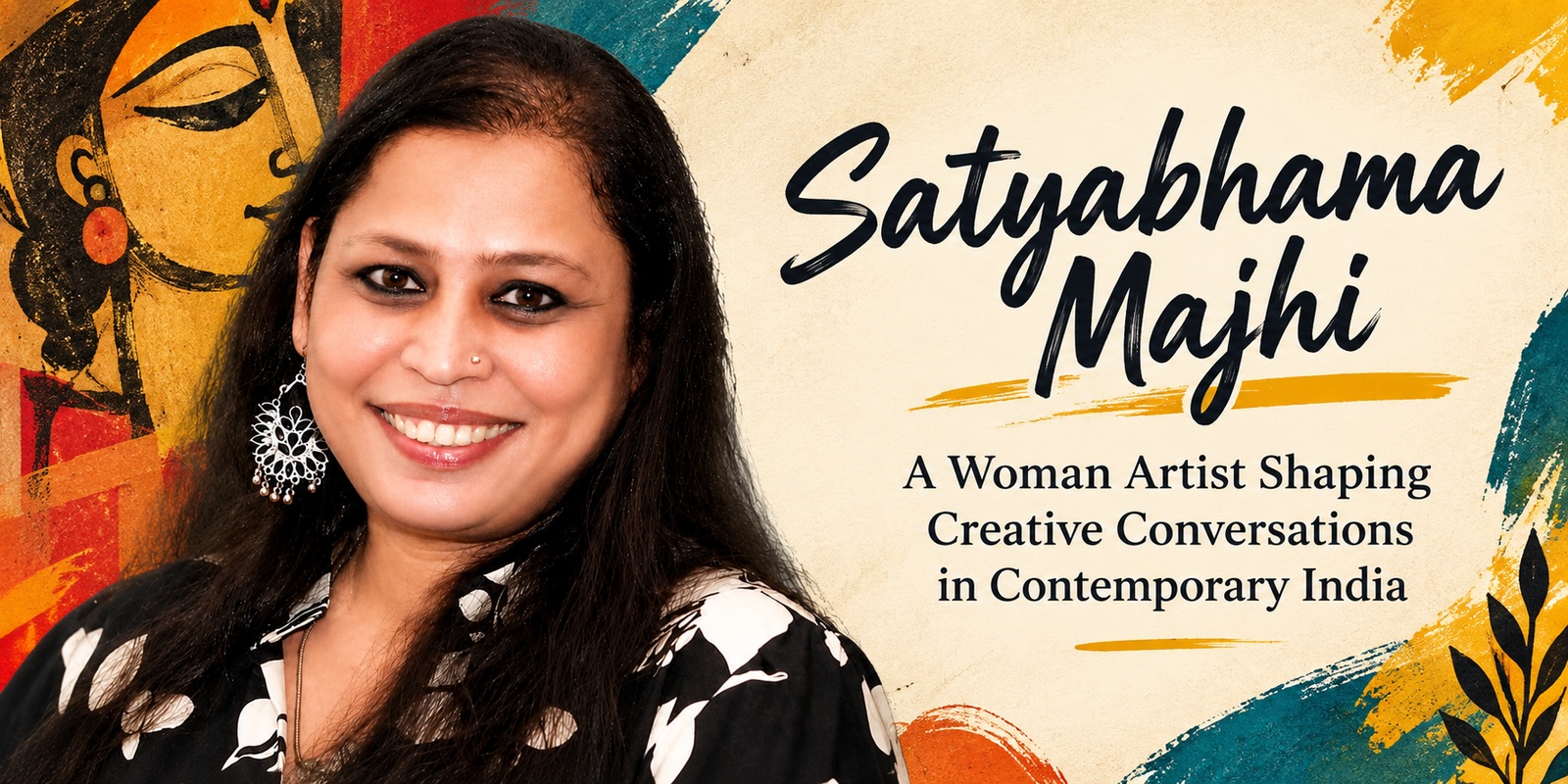
Satyabhama Majhi: Reading the Changing City Through Contemporary Art

0

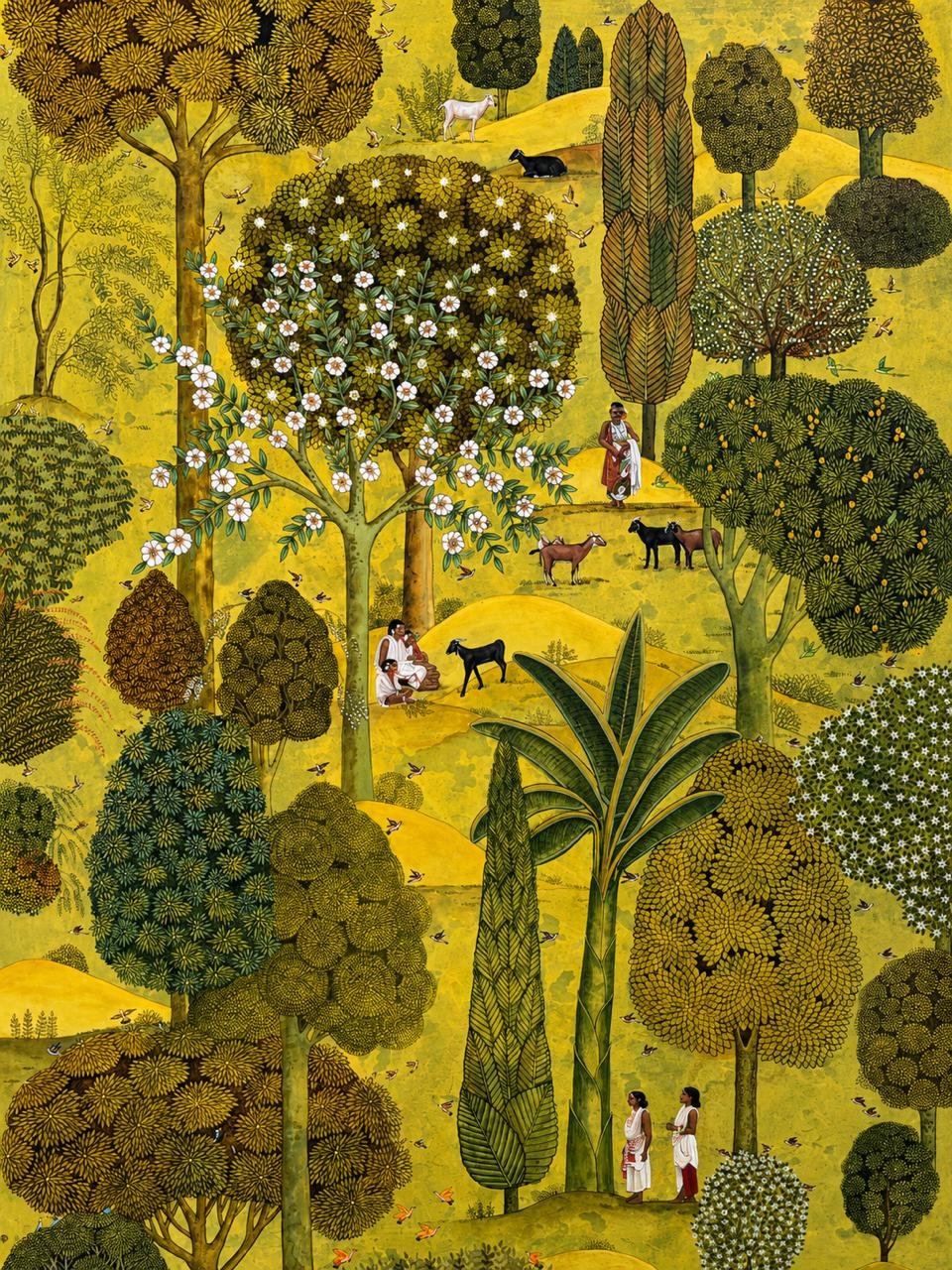
Cities are never static. Roads expand, buildings appear, neighbourhoods change, public spaces acquire new functions, and familiar landscapes gradually take on new identities. For an artist, these changes can become more than background scenery. They can become a way of understanding how people experience modern life.

For Indian contemporary artist Satyabhama Majhi, urban transformation has been an important part of her artistic observation. Based in Bhubaneswar, Odisha, she has developed a multidisciplinary practice that includes painting, sculpture, installation, photography, mixed media, public art, community engagement, and cultural initiatives.

Her work reflects an interest in the relationship between people and changing environments. Through this perspective, the city becomes not simply a physical location but a living cultural landscape shaped by memory, movement, development, and human experience.

The City as a Changing Story

Every city contains layers of time.

An old neighbourhood may exist alongside a newly developed road. Traditional practices may continue beside modern commercial spaces. Familiar landmarks can disappear while new buildings become part of everyday life.

These changes create stories.

For Majhi, observing urban life provides an opportunity to consider what happens when environments change faster than people’s memories of them.

A place can be physically transformed while remaining emotionally familiar to the people who have lived there.

This tension between physical change and remembered place provides fertile ground for contemporary artistic reflection.


Bhubaneswar as an Artistic Environment

Bhubaneswar occupies an important position in Majhi’s artistic journey.

The city combines historical and cultural traditions with the characteristics of a modern, expanding urban centre.

Its streets, neighbourhoods, institutions, public spaces, and changing architecture provide an environment in which different forms of life interact.

For an artist based in the city, urban change becomes something experienced directly rather than observed from a distance.

The everyday movement of people, the changing appearance of neighbourhoods, and the relationship between built structures and natural surroundings can all become sources of artistic thought.

Beyond the Conventional Cityscape

Majhi’s approach to urban life does not depend solely on conventional landscape painting.

Instead of treating the city simply as a collection of buildings, her broader practice encourages attention to the people who inhabit it.

A city is made meaningful through human activity.

Markets, roads, homes, workplaces, public spaces, schools, neighbourhoods, and gathering places become important because people give them social and cultural significance.

This perspective shifts the focus from architecture alone toward human experience.

Everyday Urban Life

One of the strengths of Majhi’s artistic outlook is her interest in ordinary moments.

Everyday life can appear unremarkable while it is happening.

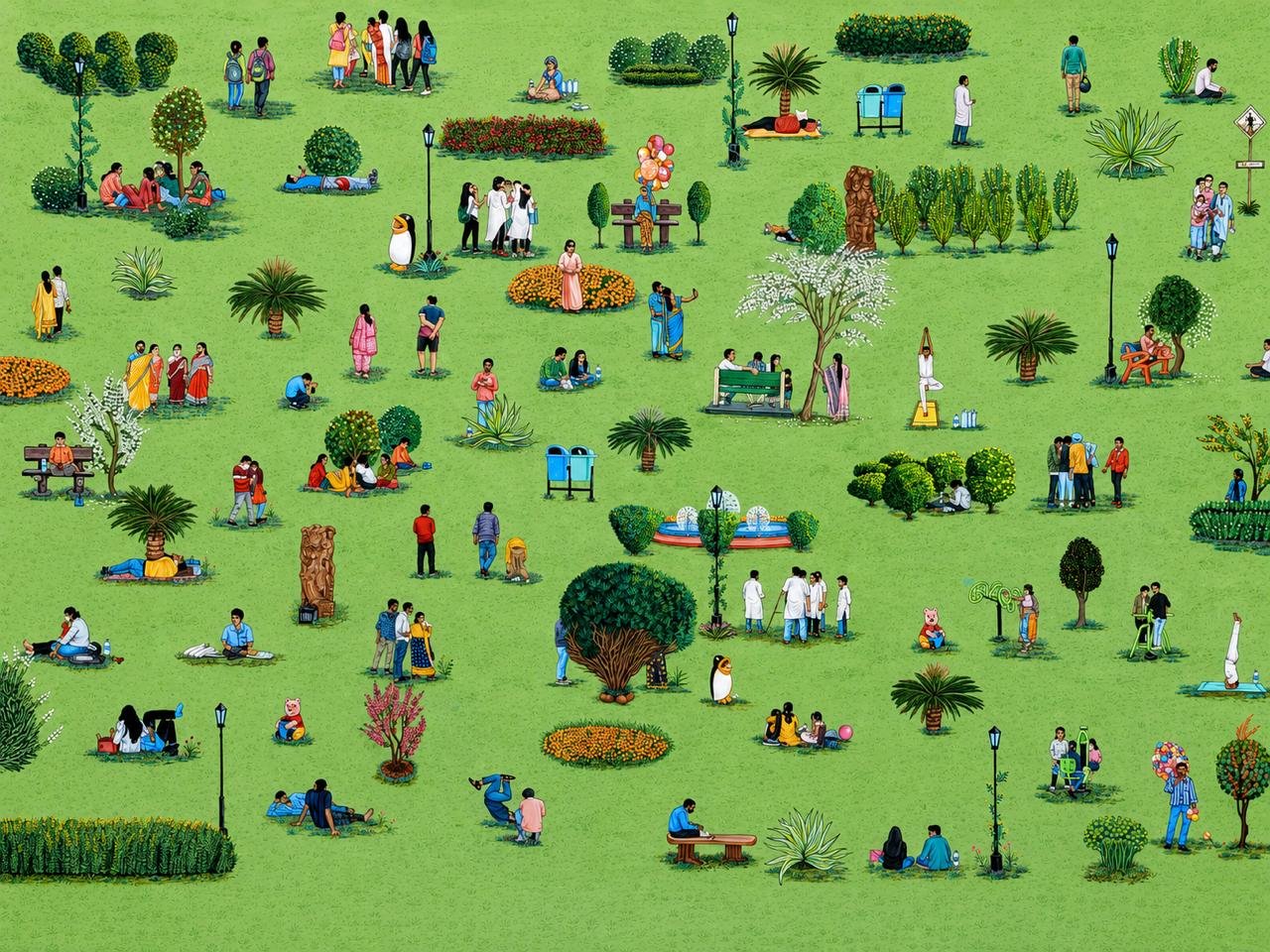
People go to work, children travel to school, families perform household activities, communities gather, and individuals move through familiar streets.

Yet these repeated experiences form the structure of urban life.

By paying attention to such moments, an artist can discover subjects that are immediately familiar but capable of carrying deeper meanings.

Memory in the Modern City

Urban development often changes the physical relationship people have with familiar places.

A road may be widened.

A building may disappear.

A neighbourhood may become more commercial.

A public space may be redesigned.

When this happens, people do not lose only physical structures. They may also lose connections to memories associated with those places.

Art can provide a way of thinking about such transitions.

Through visual storytelling, artists can preserve impressions of environments even as those environments continue to change.

People and Their Surroundings

Majhi’s practice repeatedly considers the relationship between people and their environments.

This relationship is not limited to rural or tribal settings.

Urban residents also depend on their surroundings and constantly adapt to them.

Changes in transportation, architecture, public spaces, and natural environments influence how people move and interact.

The city therefore becomes a social ecosystem.

Understanding it requires attention to both its physical structures and the people who use them.

Public Art and the Urban Landscape

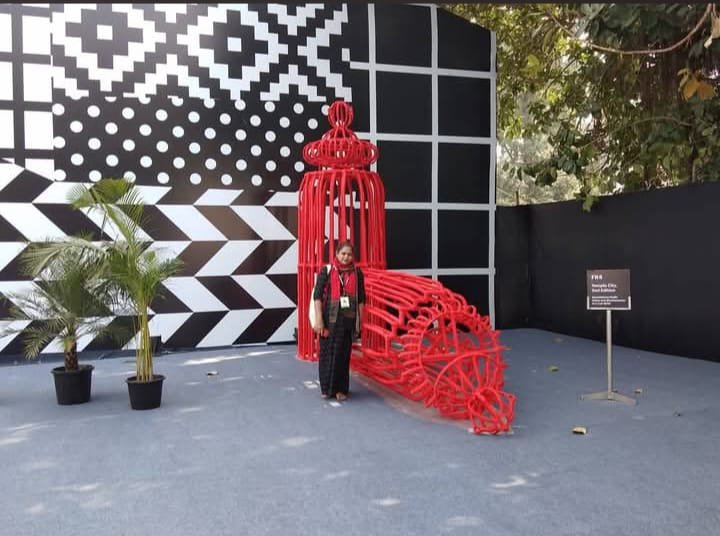
Public art provides a particularly direct way for Majhi to engage with urban environments.

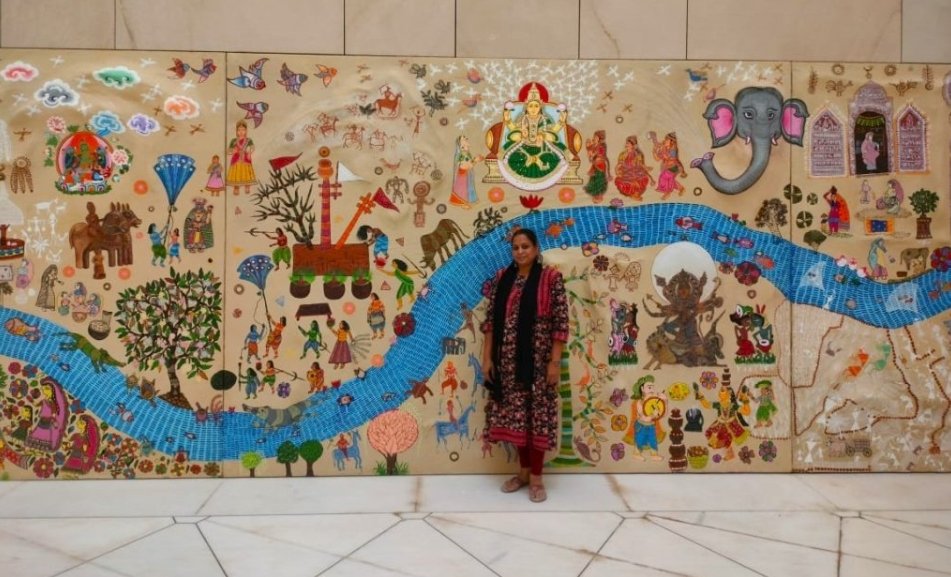
Her involvement in large-scale murals and public-art initiatives in places including Cuttack and Bhubaneswar demonstrates how artistic practice can become part of the everyday city.

A mural on a public wall does not remain isolated from its surroundings.

It shares space with roads, buildings, pedestrians, vehicles, businesses, and neighbourhood activities.

The artwork becomes part of the environment it inhabits.

The Wall as a Meeting Point

A public wall can become a meeting point between art and everyday life.

Unlike a gallery artwork, it does not require a viewer to deliberately enter an exhibition space.

People can encounter it while travelling through the city.

This changes the relationship between artwork and audience.

A public mural can become part of the visual memory of a neighbourhood.

Over time, residents may associate the artwork with a particular road, locality, journey, or period of their lives.

Cuttack and Community Space

Majhi’s public-art activities in Cuttack further demonstrate her interest in shared urban environments.

Projects associated with locations such as Ring Road and Dagabara Sahi illustrate how art can interact with neighbourhood spaces.

When artistic interventions become part of such environments, they can contribute to the identity of a place.

The wall is no longer simply an architectural surface.

It becomes a cultural surface carrying images, stories, and visual associations.

Art and the Experience of Movement

Urban life is closely connected with movement.

People constantly travel between homes, workplaces, schools, markets, cultural spaces, and public areas.

The experience of moving through a city changes how people see their surroundings.

A person travelling along the same route every day may gradually develop a visual memory of buildings, trees, walls, signs, roads, and people.

Majhi’s broader interest in movement and everyday experience provides another way of understanding this relationship between people and place.

The Contrast Between Urban and Natural Environments

One of the important questions in contemporary urban life is the relationship between development and nature.

As cities expand, natural spaces can be transformed.

Trees, open land, water bodies, and agricultural surroundings may come under pressure from construction and infrastructure.

For an artist interested in ecology and human communities, such changes are significant.

Majhi’s broader artistic concerns connect environmental observation with cultural and social experience.

The city can therefore be understood not separately from nature but as part of a larger environmental relationship.

Traditional Memory Within Modern Spaces

Modern cities do not erase traditional culture completely.

Instead, old and new often exist together.

Cultural practices can survive within rapidly changing environments. Traditional visual references can appear in contemporary settings. Communities can maintain memories of places even when the physical environment changes.

Majhi’s background in traditional art and her contemporary practice allow her to explore this coexistence.

Her work demonstrates that tradition can remain relevant within modern artistic and urban contexts.

The Artist as Urban Observer

An artist working in a city becomes a kind of visual observer.

Observation can involve noticing changes in architecture, public behaviour, neighbourhood patterns, environmental conditions, and cultural activity.

But it can also involve recognising what remains unchanged.

This balance between transformation and continuity is central to understanding urban experience.

Majhi’s artistic approach encourages attention to both.

From Observation to Interpretation

An artist does not simply document everything that is seen.

Observation is followed by interpretation.

A street can become a painting.

A public wall can become a site for collaborative art.

A changing neighbourhood can inspire questions about memory.

An ordinary activity can become part of a larger visual narrative.

Majhi’s multidisciplinary practice provides different mediums through which such interpretations can take shape.

Urban Art and Community Participation

Community-based art adds another layer to urban practice.

A public artwork can involve local residents, artists, artisans, institutions, and other participants.

Such projects can create a sense of shared ownership.

The artwork becomes connected to the people who encounter it regularly.

This approach aligns with Majhi’s wider understanding of art as a process that can involve participation rather than simply observation.
The Role of Cultural Institutions

Urban art ecosystems also depend on institutions.

Galleries, academies, art trails, educational organisations, cultural foundations, and public initiatives can provide spaces where artists and communities interact.

Majhi’s involvement with institutions and cultural platforms has allowed her practice to move across studio, gallery, public, and community settings.

These networks help contemporary art become part of a city’s cultural life.

A City Seen Through Multiple Perspectives

There is no single way to understand a city.

A resident may experience it through memory.

A child may experience it through curiosity.

A worker may experience it through daily travel.

An artist may notice visual changes.

A community may experience development through its effects on shared spaces.

Majhi’s multidisciplinary approach accommodates these multiple perspectives.

Her interest in people and places allows the city to be understood as a collection of individual and collective experiences.

The Importance of Cultural Memory

As cities modernise, cultural memory becomes increasingly important.

Art can help preserve visual associations with places, communities, and everyday experiences.

It can also reinterpret them for new audiences.

This does not mean resisting change.

Instead, it means recognising that development and memory can exist in conversation.

Majhi’s practice provides a framework for exploring this relationship.

Connecting Urban and Rural Experiences

Although urban life is an important part of her artistic context, Majhi’s work extends into rural and tribal environments as well.

This creates an interesting dialogue.

The city and the village are not necessarily separate worlds.

People, materials, cultural traditions, economic opportunities, environmental concerns, and social changes connect them in many ways.

An artist moving between these environments can observe both their differences and their relationships.

The Broader Contemporary Context

Urban transformation is one of the defining experiences of contemporary India.

Cities are expanding, populations are changing, technologies are altering daily routines, and traditional environments are adapting to new economic and social realities.

Artists can play an important role in reflecting upon these transformations.

Majhi’s work contributes to this conversation by connecting urban observation with broader questions of memory, identity, environment, community, and cultural continuity.

Conclusion

Satyabhama Majhi’s relationship with urban environments demonstrates how the changing city can become an important subject of contemporary artistic reflection.

Through her connection with Bhubaneswar and her public-art activities in Odisha, she engages with places where development, memory, community, culture, and everyday life intersect.

Her approach moves beyond simply depicting buildings or streets.

Instead, it considers the people who inhabit these spaces, the memories attached to them, and the ways environments influence human experience.

Public murals transform walls into cultural surfaces. Everyday observations become visual narratives. Changing landscapes raise questions about memory and continuity. Traditional knowledge finds new relevance within contemporary surroundings.

In this way, Majhi’s artistic practice offers a thoughtful way of reading the modern Indian city—not simply as a collection of structures, but as a living environment constantly shaped by people, memories, movement, culture, and change.

Her work reminds us that when a city changes, its visual appearance changes—but so too do the stories people carry about the places they call home.

Building an Ecosystem for Indian Classical Dance Beyond Individual Festivals

0

The preservation of Indian classical dance requires more than occasional performances or the efforts of individual artists. Behind every successful artistic tradition is a wider network of teachers, performers, students, researchers, festival organisers, cultural institutions and audiences. Cultural organiser and Kuchipudi exponent Vikram Kumar B R, popularly known as Bathina Vikram Goud, has consistently promoted this broader ecosystem-based approach to the development of Indian classical arts.

Over the years, his work has expanded across several interconnected areas, including dance education, theatre, choreography, festival organisation, cultural journalism, documentation and institutional development. Rather than treating each activity as an independent project, his initiatives reflect the idea that different parts of the cultural ecosystem must support one another.

A festival, for example, can provide an artist with a stage, but an artist first needs training and mentorship. A young dancer may need opportunities to perform, but audiences also need exposure and education to appreciate the art form. Researchers and writers can document artistic traditions, while cultural institutions can provide the organisational framework needed to sustain programmes.

This interconnected model is visible in the work of the Nataraj Music and Dance Academy (NMDA), founded by Vikram Kumar B R in 2000. The academy has supported training in Kuchipudi, Indian folk traditions, Indian classical music and instrumental music, while also organising competitions, workshops, seminars and cultural events.

Festival platforms have added another layer to this ecosystem. Initiatives such as Vysakhi Nrithyotsav, Bharat Nrithyotsav, Sathyabhama Yuva Nrithyotsav, Nataraj Nrithyotsav and Jathis Music & Dance Festival have created opportunities for artists at different stages of their careers.

Youth development is particularly important within this model. Dedicated platforms for young artistes can help students move from classroom training to professional performance. Scholarships and fellowship programmes, as envisioned through the Federation of Classical Dance Festival Organisers (FCDFO), can further strengthen this pathway.

Senior artists also have an important role to play. Experienced practitioners carry knowledge accumulated through years of performance and teaching. Festivals that bring established masters and emerging artistes together can encourage intergenerational learning and create opportunities for mentorship.

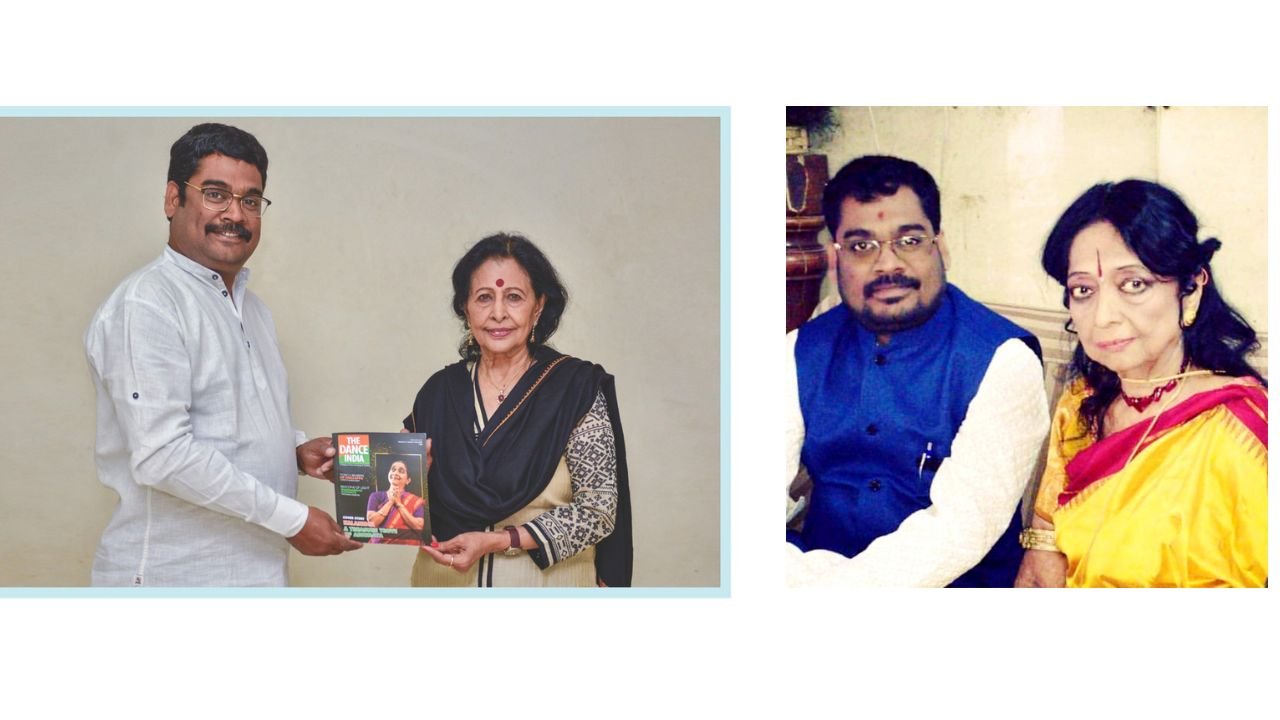
Documentation forms another essential part of the ecosystem. Vikram Kumar B R has worked through cultural journalism and publications to record information about artists, performances and traditions. His association with The Dance India, a national English-language cultural publication, reflects the belief that artistic heritage should not depend entirely on memory.

This concern becomes particularly significant in the digital age. Performances, choreographies, photographs, articles and archival materials can be copied or circulated without proper context or credit. Responsible documentation can help preserve original sources while ensuring that artists and cultural traditions receive appropriate recognition.

The international dimension of this ecosystem is also visible in initiatives such as the International Traditional Dance Congress (ITDC) and international dance festivals. These platforms can connect performers, scholars, teachers and cultural representatives while creating opportunities to discuss tradition, pedagogy, history and contemporary challenges.

The objective is therefore not simply to increase the number of festivals. It is to build an environment in which classical dance can continuously develop.

For Vikram Kumar B R, cultural preservation involves maintaining the complete chain through which artistic knowledge moves. Teachers transmit technique; artists interpret and perform; festivals create platforms; researchers study traditions; publications document them; institutions provide support; and audiences ensure that the art remains socially relevant.

This approach is particularly important in an era when traditional performing arts compete with rapidly changing entertainment habits. Classical dance cannot rely solely on historical prestige. It needs active practitioners, informed audiences, modern organisational systems and meaningful opportunities for younger generations.

The ecosystem model also allows different cultural initiatives to reinforce one another. A student trained through an academy can perform at a youth festival, later participate in national or international programmes, contribute to documentation and eventually become a teacher or mentor. In this way, one generation can become the foundation for the next.

Vikram Kumar B R’s journey across dance, theatre, education, festivals, publishing and cultural organisation reflects this interconnected vision. His initiatives demonstrate that preservation is not a single activity but a continuing process requiring participation at multiple levels.

Ultimately, the strength of Indian classical dance lies not only in its celebrated performers or historic repertoire but in the cultural ecosystem that keeps the tradition alive. By focusing on that ecosystem, Vikram Kumar B R has sought to create structures through which classical arts can remain practised, performed, documented, respected and passed on to future generations.

Dr. Reshma Arora Develops a Multidisciplinary Career Across Science, Education, Literature and Social Advocacy

0

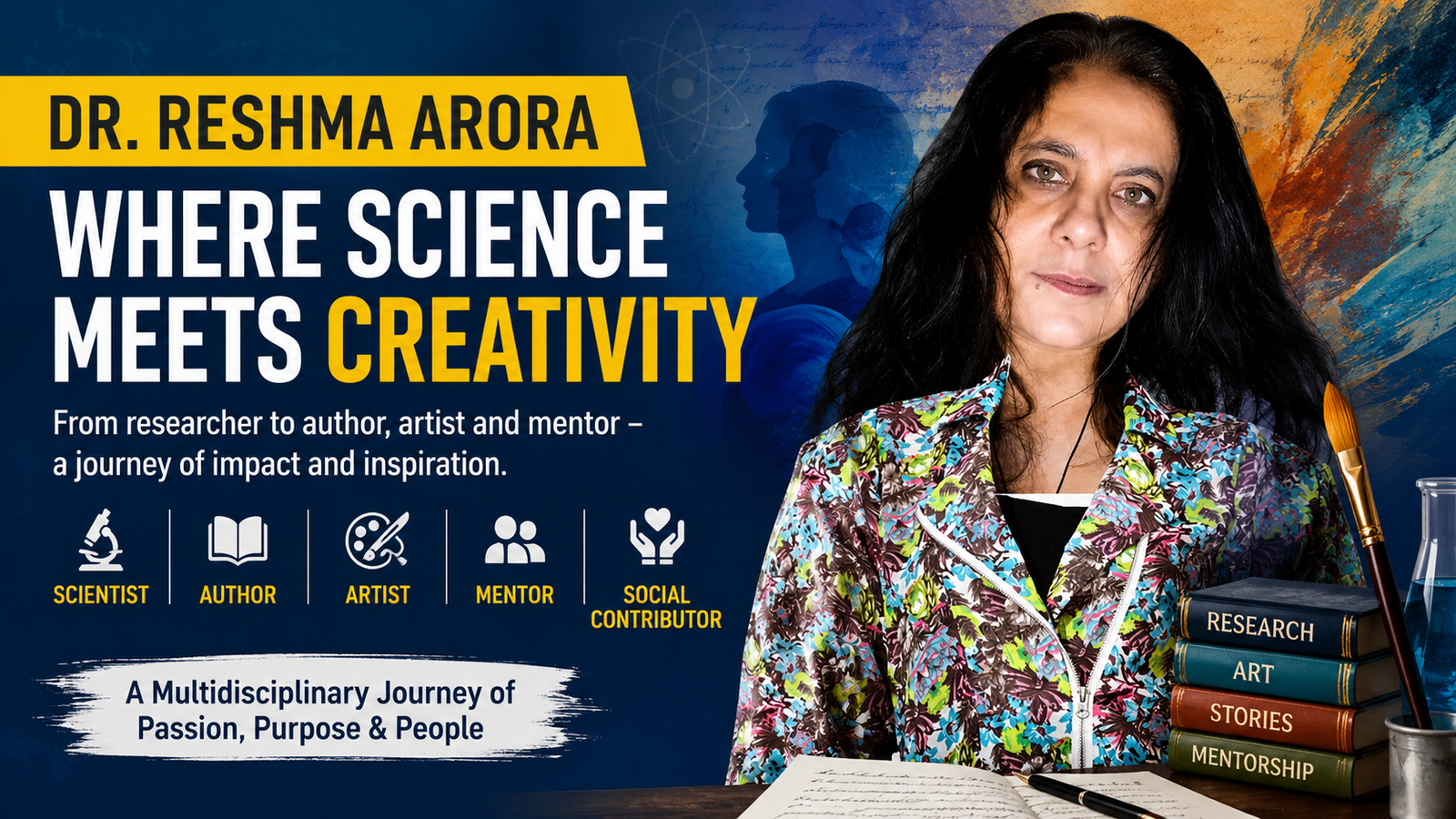
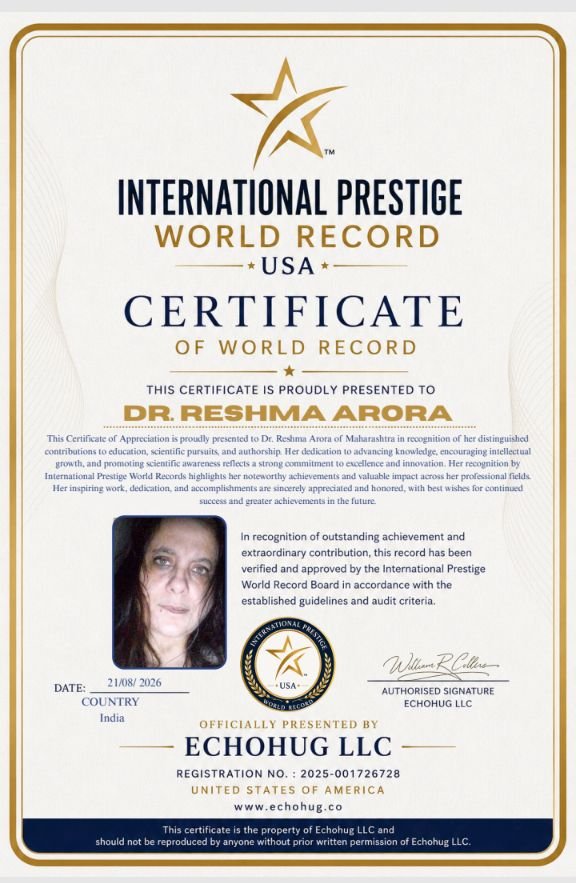
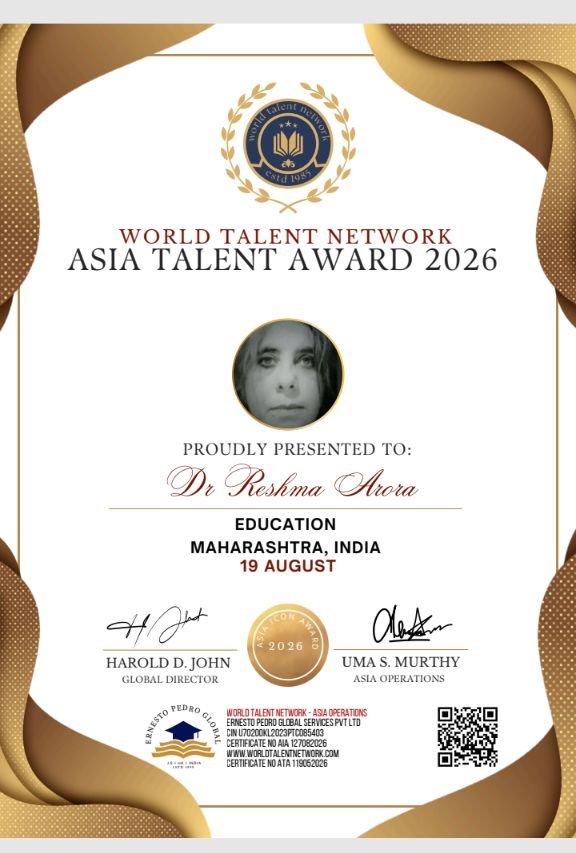
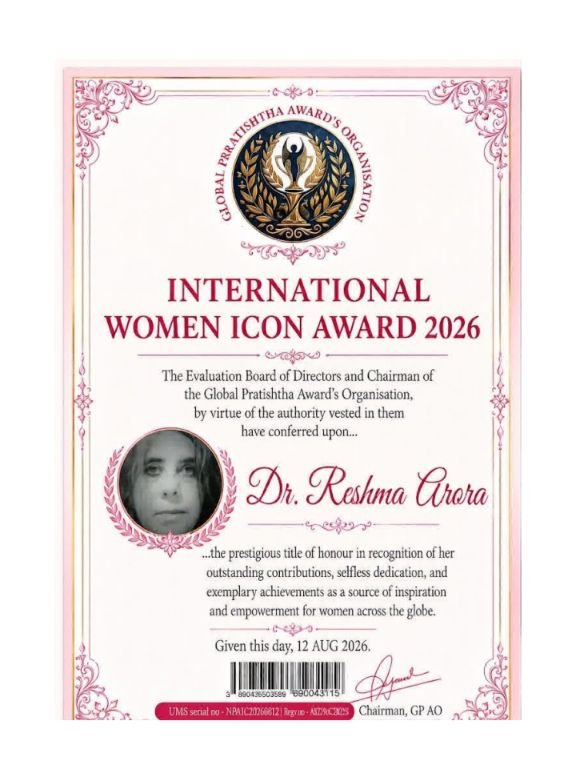
Maharashtra: Dr. Reshma Arora has built a multidisciplinary professional profile spanning science, education, research, authorship, mentorship, literature, painting and voluntary advocacy. Her career reflects an effort to engage with academic, creative and social fields rather than limiting her professional interests to a single discipline.

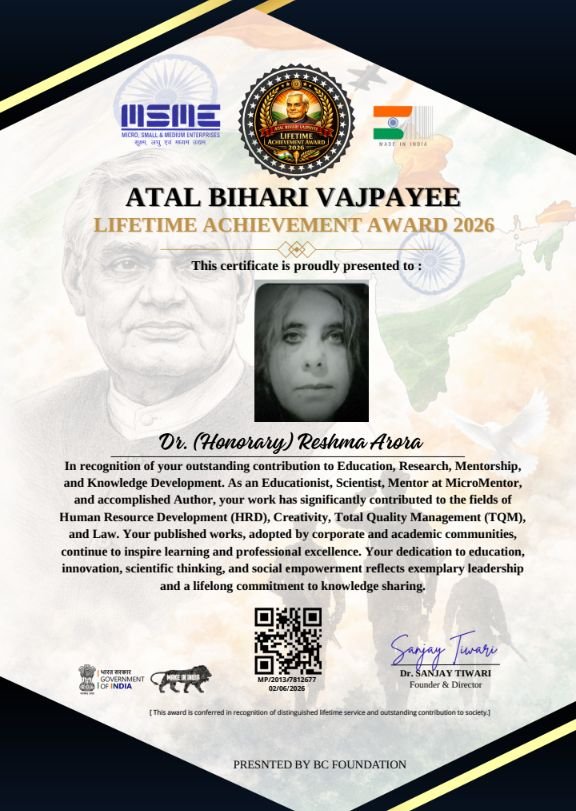
According to information shared about her professional background, Arora is associated with mathematics, engineering, technology and science and is described as a registered scientist with NASA in specific topics. Her wider professional interests include Human Resource Development (HRD), creativity, Total Quality Management (TQM) and law.

Education and mentorship form another important part of her work. She has been associated with MicroMentor as a mentor and has developed a profile as an educator, researcher and author. Her activities emphasize knowledge sharing, professional development and continuous learning.

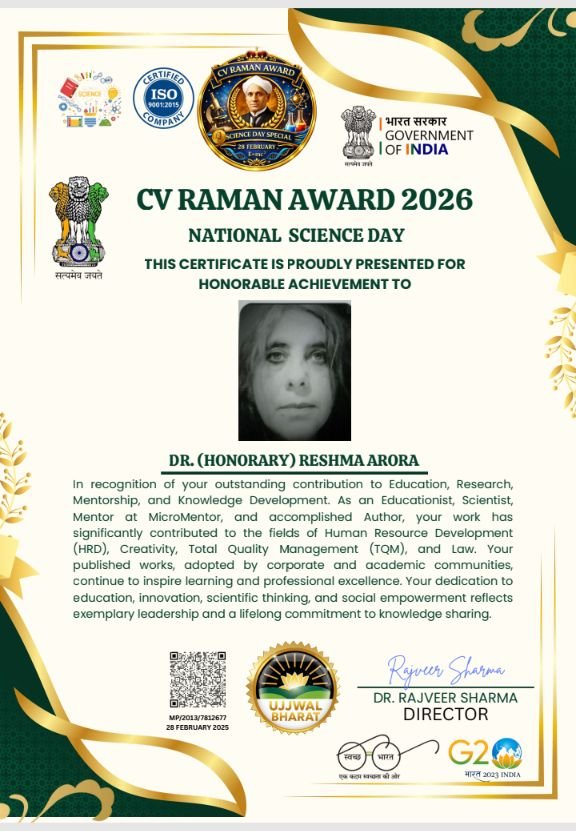
The CV Raman Award 2026, associated with National Science Day, recognized contributions described in the certificate as including education, research, mentorship and knowledge development. The recognition also identifies Arora as an educationist, scientist, mentor and author.

Her creative and literary work received recognition through the Indian Literature Award 2026, presented by the Indian Literature & Arts Society in the Science & Education category for Maharashtra. The recognition highlights the intersection of her educational background, intellectual work and authorship.

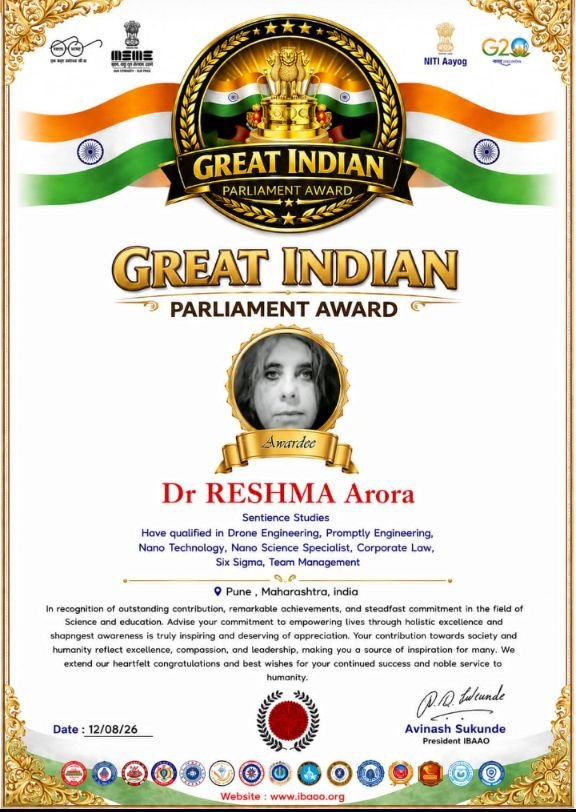
In April 2026, Arora received the Padma Shree National Pride Award 2026, with the certificate citing education, mentorship, research and social advocacy. The India Social Ambassador Award 2026 recognizes her as a scientist, author, educationist and advocate and references voluntary advocacy, sentience studies and animal rights.

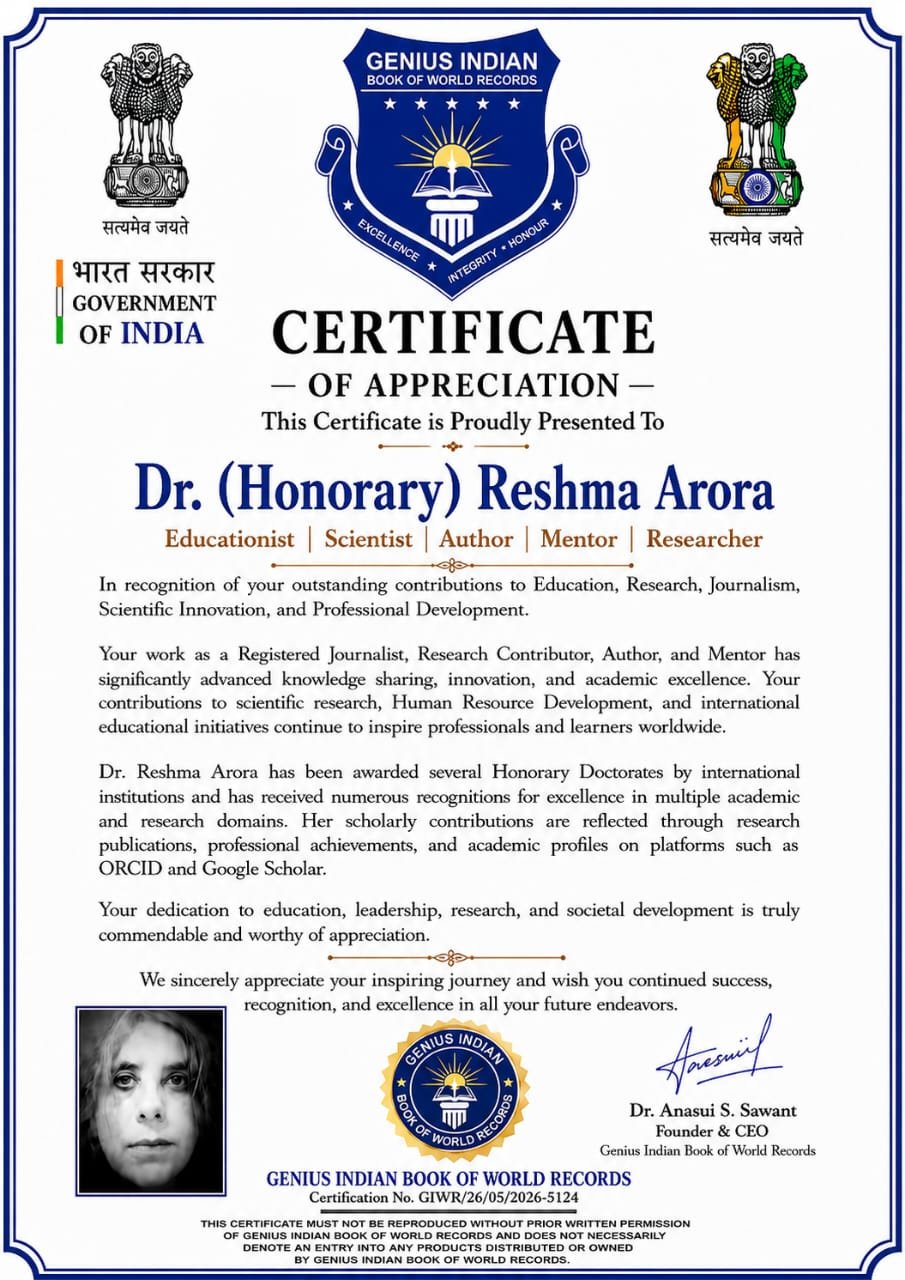
Her professional profile also includes a Forbes Book of World Records certificate issued in March 2026. The certificate cites contributions and efforts in areas including arts, education and healthcare service. The Genius Indian Book of World Records has also recognized Arora as an educationist, scientist, author, mentor and researcher, with the certificate referring to education, research, journalism, scientific innovation and professional development.

Arora is additionally described as a Life Fellow Member of the International Association for Academic and Scientific Development and as having received an Honorary Doctorate from Sahara Charitable.

Literature and painting provide creative dimensions to her otherwise science- and education-focused profile. Through writing and art, she explores forms of expression that complement her academic and professional interests.

Her social activities further broaden her profile. Voluntary advocacy, animal rights and sentience studies are among the areas associated with her social contribution, demonstrating an interest in issues beyond conventional academic disciplines.

The range of awards and recognitions associated with Arora during 2026 reflects the diversity of her professional activities. Science, education, literature, mentorship, arts and social advocacy each represent different aspects of her journey.

Dr. Reshma Arora’s multidisciplinary career demonstrates the intersection of scientific learning, education, creative expression and social engagement. Her continuing work across these areas represents a professional journey shaped by knowledge sharing, mentorship, research and an interest in contributing across multiple fields.


https://wikigenuine.org/index.php/Dr._Reshma_Arora

https://www.facebook.com/reshma.arora.12576

Dr. Reshma Arora’s Contributions to Literature, Art and Education Earn Recognition Through Indian Literature Award 2026


Dr. Reshma Arora’s Multidisciplinary Journey Bridges Science, Education, Research and Mentorship


Javed Khan on Creating a Scalable Support Infrastructure for International Brokerage Companies

0

London / Dubai / India — August 2026: International brokerage companies often need to balance business growth with the practical demands of customer service, technical support and daily operations. As customer bases expand across geographical markets, businesses may require infrastructure that can scale without compromising operational coverage.

Javed Khan, Director of Prixim Global, discusses how the company approaches scalable support through technology and outsourcing.

Q1: Why does scalability matter for brokerage businesses?

Javed Khan: A brokerage’s requirements can change significantly as it grows. A company may start with a smaller customer base and later need additional support personnel, technology infrastructure and operational coverage.

A scalable model allows businesses to expand these capabilities according to demand.

Q2: What technology does Prixim Global provide to brokerages?

Javed Khan: We provide MT5, Match-Trader, PriximTrader and prop trading technology, alongside hosting, CRM, website development, digital marketing and DevOps services.

These capabilities address different aspects of a modern brokerage’s technology environment.

Q3: How can outsourcing support scalability?

Javed Khan: Outsourcing gives companies access to additional resources without requiring every function to be developed internally. Businesses can outsource selected activities and increase or modify the scope as their operational requirements change.

Q4: What is the role of ForexOutsource?

Javed Khan: ForexOutsource is our dedicated outsourcing brand. We provide outsourcing services from our India Delivery Center and have already catered to more than 30 brokerage companies.

Our teams support clients in multiple languages and across 24×7 time zones.

Q5: What services can be scaled through ForexOutsource?

Javed Khan: Depending on the client, we can provide customer care, live chat, email support, technical support, KYC and reporting, server management and complaint management.

The model can be structured around the functions that the client wants to delegate.

Q6: Why is multilingual support important when scaling internationally?

Javed Khan: As a brokerage enters additional markets, the diversity of its customer base can increase. Multilingual support provides businesses with the ability to communicate with customers in different languages.

Q7: How does 24×7 timezone coverage support scalability?

Javed Khan: International growth means customer activity can occur throughout different parts of the day. A 24×7 timezone model provides broader operational coverage and allows businesses to support customers across international markets.

Q8: Does scaling through outsourcing mean giving up operational control?

Javed Khan: Not necessarily. A properly structured outsourcing arrangement defines responsibilities, communication processes and performance expectations. The client can retain strategic control while assigning specific functions to an external team.

Q9: What is the advantage of combining technology and outsourcing?

Javed Khan: They address complementary needs. Technology provides the systems, while outsourcing provides operational resources. Having both capabilities available allows businesses to build a more complete operating model.

Q10: What is your vision for Prixim Global?

Javed Khan: We want to continue building technology and outsourcing capabilities that can support brokerage and fintech companies as they grow internationally. Our focus is on flexibility, operational support and long-term partnerships.

About Prixim Global

Prixim Global, headed by Director Javed Khan, provides technology, outsourcing and integration solutions for brokerage, forex, fintech and prop trading businesses. Through ForexOutsource, its India Delivery Center has catered to 30+ brokerage companies, offering multilingual and 24×7 timezone outsourcing support.

*For more information, visit

https://www.instagram.com/priximglobal

https://x.com/prixim_global

priximglobal.com


Amresh Majhi’s Journey from Banking Professional to Entrepreneur and Manufacturer

0

Sundergarh, Odisha: Amresh Majhi has built a diverse professional career that has taken him from banking and financial services to international corporate assignments and eventually into entrepreneurship, manufacturing and agriculture. Based in Sundergarh, Odisha, his career reflects experience across banking, FMCG, textiles and organic farming.

Majhi completed his schooling at Dalmia Vidya Mandir in Rajgangpur, Odisha, where he received the National Talent Search Examination (NTSE) Scholarship. He completed Class 10 in 1996 with 92.4% marks and was reported to have secured 84th position at the All India level in the CBSE examination. He later completed his 10+2 education from Government College, Rourkela, scoring 88.4% in PCM and securing an Odisha state rank of 15. (Wiki Genuine)

He subsequently pursued a B.Tech. in Computer Science and graduated in 2003. His technical education was followed by an entry into the banking sector through campus recruitment. Majhi joined UTI Bank, now Axis Bank, and later worked as a Cluster Head. In 2006, he left the position to pursue an MBA and subsequently joined Axis Money through campus selection. (Wiki Genuine)

A significant phase of his corporate career came between 2008 and 2012, when he worked in London, United Kingdom. The international assignment gave him exposure to a global corporate environment and added an international dimension to his professional experience. He continued his corporate career until 2015, when he decided to move into entrepreneurship. (Wiki Genuine)

Moving Into Entrepreneurship

In 2015, Majhi established Panchora Industries Pvt. Ltd., entering the masala and FMCG manufacturing sector in Odisha. The venture marked a transition from his earlier corporate career toward business ownership and manufacturing.

His entrepreneurial activities later expanded. In 2020, he became associated with ventures including Vrindaban Textiles and Darveys India, broadening his interests into textiles, consumer products and other commercial activities. (Wiki Genuine)

Expanding Into Agriculture

Alongside his business activities, Majhi has also developed an interest in organic farming. His published profile states that he undertakes organic farming on approximately 50 acres of land in Sundergarh, Odisha.

His involvement in agriculture represents another stage of his professional journey, combining entrepreneurship with farming and land-based activities. (Wiki Genuine)

Recognition for Business Activities

Majhi’s published profile lists several recognitions connected with his professional and business activities. These include an Eastern India Best Manufacturer recognition by Zee TV and a Fastest Emerging FMCG recognition associated with the Chief Minister of Odisha.

The profile also records recognition from the Government of India in connection with the supply of masks and sanitizers to Bangladesh and Afghanistan. (Wiki Genuine)

A Multi-Sector Professional Career

From his early academic achievements and banking career to international corporate experience, FMCG manufacturing, textiles and organic farming, Amresh Majhi’s professional path has crossed several sectors.

His transition from a corporate career into entrepreneurship illustrates a move toward building and managing ventures of his own while maintaining interests in manufacturing and agriculture. Today, his professional profile encompasses entrepreneurship, FMCG manufacturing, textiles and organic farming in Odisha. (Wiki Genuine)

Source: Publicly available biographical information concerning Amresh Majhi. Amresh Majhi profile

Oxford Conference Highlights Alex Sam’s Research on Orphan Care and Family Environments

0

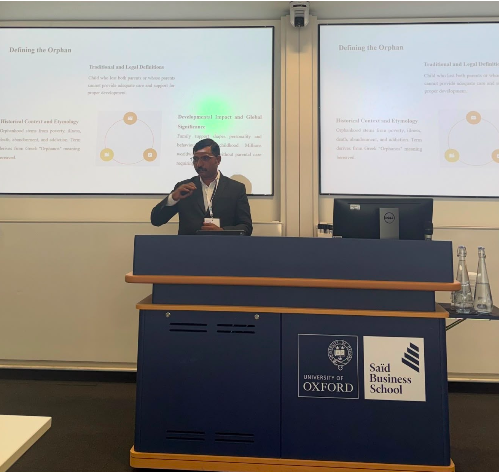
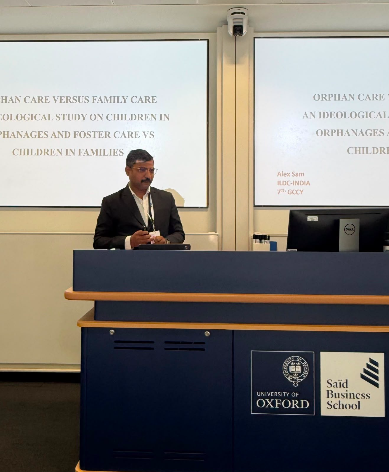
Oxford, UK: Alex Sam, a social work professional and researcher, presented his research on orphan care and family-based care during the 7th Global Conference on Children and Youth, held in Oxford from 20 to 22 August 2026.

The research paper, “Orphan Care Versus Family Care: An Ideological Study on Children in Orphanages and Foster Care vs Families,” examines different approaches to caring for children who are orphaned or vulnerable.

Alex Sam, associated with the International Leadership Development Centre, India, presented the study before an international audience of professionals and researchers working in children’s welfare and social development.

At the centre of the research is an examination of how children without conventional family structures are represented in literature. The study compares family-based care with foster care and institutional environments and explores the emotional and social dimensions of these different settings.

Literary figures including Oliver Twist, Jane Eyre, Huckleberry Finn and Harry Potter form part of the study’s discussion. These characters provide examples through which the research considers childhood experiences, identity, belonging and life outside conventional family environments.

The research further explores how literary representations can contribute to broader social perceptions of orphanhood and child care. It connects these narratives with wider questions surrounding social policy and child welfare.

During the Oxford presentation, Alex Sam emphasised the significance of creating care environments where children can experience emotional stability, support, belonging and opportunities for personal development.

He also discussed the importance of evidence-based approaches to child welfare. Stronger family support networks and community involvement, he suggested, can contribute to more sustainable child-care and protection mechanisms.

With academic studies in business administration and social work, Alex Sam has developed research interests in social work, child welfare and family-based care.

The global conference brought together academics, researchers, practitioners and child-rights professionals to discuss current issues involving children and young people.

Presenting his research at an international platform in Oxford marks an important milestone in Alex Sam’s professional and academic journey and contributes to the continuing international conversation around family care, orphanhood and vulnerable children.

Keywords: Alex Sam, Orphanhood, Orphan Care, Family Care, Foster Care, Child Welfare, Social Work, Children and Youth, Family Support, Oxford Conference.

Photo Credit: Tanvi Kapoor

Nook & Hire and the Changing Role of AI in Modern Recruitment

0

Artificial intelligence is changing the way businesses operate, and human resources is becoming one of the most important areas where this transformation is taking place.

Recruitment involves large volumes of information, repetitive tasks, candidate evaluation, and time-sensitive decisions. These characteristics make it a natural environment for AI-assisted technology.

Preeti Sharma, founder of Nook & Hire, is building an AI-powered HR-tech platform that aims to bring intelligence and structure into this process.

Launched in June 2025, Nook & Hire combines candidate preparation, skill development, AI-assisted screening and matching, evaluation, recruitment workflows, background verification, payroll, and employee management.

The Recruitment Industry Is Changing

Traditional recruitment relied heavily on:

  • Resumes
  • Job advertisements
  • Manual screening
  • Phone calls
  • Interviews
  • Spreadsheets
  • Email communication

Technology has already digitized many of these activities.

The next stage is making them more intelligent and connected.

AI can help recruiters process information faster and identify patterns that may be difficult to find manually.

Why AI Has Become Important in Hiring

Recruiters can receive large numbers of applications for a single role.

Manually reviewing every profile can take significant time.

At the same time, organizations need to move quickly because talented candidates may have multiple opportunities.

AI-assisted recruitment can help reduce repetitive work.

It can support screening, matching, and workflow management.

This can allow recruiters to spend more time on human interaction and decision-making.

AI-Assisted Screening

Candidate screening is one of the most obvious areas where AI can contribute.

Instead of reviewing every application manually from the beginning, AI can assist by analyzing available candidate information against job requirements.

This can help recruiters identify potentially relevant profiles.

The goal is not simply to eliminate human review.

It is to make the initial review process more efficient.

Smarter Candidate Matching

Recruitment is fundamentally a matching problem.

Candidates have skills.

Companies have requirements.

The objective is to find meaningful alignment.

Nook & Hire uses AI-assisted matching to help connect candidate profiles with relevant opportunities.

This can potentially reduce irrelevant applications and improve the efficiency of recruitment teams.

Preparation Before Evaluation

One of the important aspects of Nook & Hire’s model is that technology is not limited to employer-side recruitment.

The platform also focuses on candidate readiness.

Candidates can access:

  • Interview preparation
  • Skill development
  • Structured learning

This creates a more complete recruitment ecosystem.

Why AI and Candidate Development Work Together

AI can identify potential matches.

But candidates still need to demonstrate their capabilities.

A prepared candidate can potentially perform better during evaluation.

Therefore, the combination of candidate development and intelligent recruitment creates a stronger model than either one alone.

Improving Recruitment Speed

Hiring delays can affect business performance.

An organization may need a particular role filled quickly.

Recruiters may need to review many applications.

AI can help accelerate screening and matching.

Structured workflows can help candidates move through different stages more efficiently.

The result can be a more streamlined recruitment process.

Speed Must Be Balanced With Quality

Faster hiring is valuable only if organizations maintain quality.

Hiring the wrong person can create additional costs and operational challenges.

This is why evaluation remains important.

AI can support initial analysis.

Recruiters and managers can provide human judgment.

The combination can create a better balance between speed and quality.

Preeti Sharma’s Perspective

Preeti Sharma identified a deeper problem in recruitment: the gap between candidate preparation and employer expectations.

Her MBA from Ballari Institute of Technology & Management provided a foundation in business and organizational thinking.

She approached the challenge by creating a platform designed to address recruitment from both sides.

A More Complete Hiring Ecosystem

Nook & Hire goes beyond candidate sourcing.

Its broader functions include:

Candidate Preparation

Helping candidates improve readiness.

AI-Assisted Matching

Connecting potential talent with relevant roles.

Evaluation

Supporting structured candidate assessment.

Recruitment Workflows

Organizing the hiring process.

Background Verification

Supporting pre-employment verification.

Payroll

Managing an important post-hiring function.

Employee Management

Supporting the employee lifecycle.

This creates a connected HR ecosystem.

AI Does Not Replace Human HR Professionals

There is often concern that AI could replace recruiters.

However, recruitment involves many human responsibilities.

Recruiters build relationships.

Hiring managers evaluate team fit.

HR professionals manage employee experiences.

Leadership makes workforce decisions.

AI can support these professionals by reducing repetitive tasks and organizing information.

The Rise of AI-Augmented HR

The future may be less about fully automated HR and more about AI-augmented HR.

In this model:

AI handles information-intensive tasks.

Humans handle context, relationships, and judgment.

This can create a productive division of responsibilities.

Why Integrated Platforms Matter

AI becomes more valuable when connected to broader workflows.

A screening tool alone may identify candidates.

But what happens afterward?

Candidates need evaluation.

Selected candidates may require verification.

Employees need payroll and management.

Nook & Hire connects these stages into a wider platform.

Supporting Businesses as They Scale

Growing organizations often face increasing HR complexity.

More employees require more management.

More hiring creates larger candidate pools.

More departments create more coordination.

An integrated platform can help manage these requirements.

AI can provide additional scalability.

India’s Growing HR-Tech Market

India has a large workforce and a rapidly evolving business environment.

Companies are adopting automation.

Startups are expanding.

New skills are emerging.

Organizations need efficient ways to identify and manage talent.

This creates significant opportunities for HR-tech companies.

Nook & Hire is being developed within this changing environment.

The Future of Recruitment Technology

The recruitment systems of the future may combine:

  • AI-powered screening
  • Intelligent matching
  • Skills-based evaluation
  • Candidate training
  • Automated workflows
  • Human decision-making
  • Employee lifecycle management

This represents a transition from simple digital recruitment toward intelligent HR ecosystems.

Nook & Hire’s Future Direction

The platform aims to expand across industries, strengthen its AI capabilities, establish enterprise partnerships, and improve candidate training systems.

These objectives support its long-term vision of creating scalable recruitment infrastructure.

Conclusion

Artificial intelligence is changing recruitment by helping organizations process information faster, identify potential matches, and automate repetitive activities.

But technology alone is not enough.

Candidates need preparation.

Recruiters need structure.

Companies need relevant talent.

HR teams need connected workflows.

Preeti Sharma’s Nook & Hire brings these needs together through an AI-powered ecosystem.

By combining AI-assisted recruitment with candidate development, structured evaluation, verification, payroll, and employee management, the platform represents a broader shift in how organizations can approach talent.

The future of recruitment may not be defined by AI replacing people.

Instead, it may be defined by AI helping people discover talent faster, prepare candidates better, and build stronger connections between skills and opportunity.

HamaraMakaanProperties.com Connects Property Seekers with Listings Across 50+ Indian Cities

0

India, August 2026: India’s real estate market extends across established metropolitan areas as well as rapidly developing cities. HamaraMakaanProperties.com is creating a multi-city property platform where users can search for properties across more than 50 cities.

The website currently highlights 12,000+ property listings and coverage across 50+ cities.

Among the cities featured on the platform are Delhi, Mumbai, Bangalore, Pune, Hyderabad, Chennai, Noida, Gurugram, Kolkata and Ahmedabad.

Users can search by city or locality and then refine results according to budget, property type, BHK, furnishing and other requirements.

The platform covers both residential and commercial requirements, while users can also explore rental and PG/co-living options.

A multi-city platform can be especially useful for people relocating to another city, investors comparing markets or families searching for properties in different locations.

HamaraMakaanProperties.com aims to simplify this process by bringing property discovery, search filters and seller connections together on one platform.

For Property Search, Listing & Enquiries: Faridabad oriented Business
Contact number 9528626262
Official Website: https://hamaramakaanproperties.com/